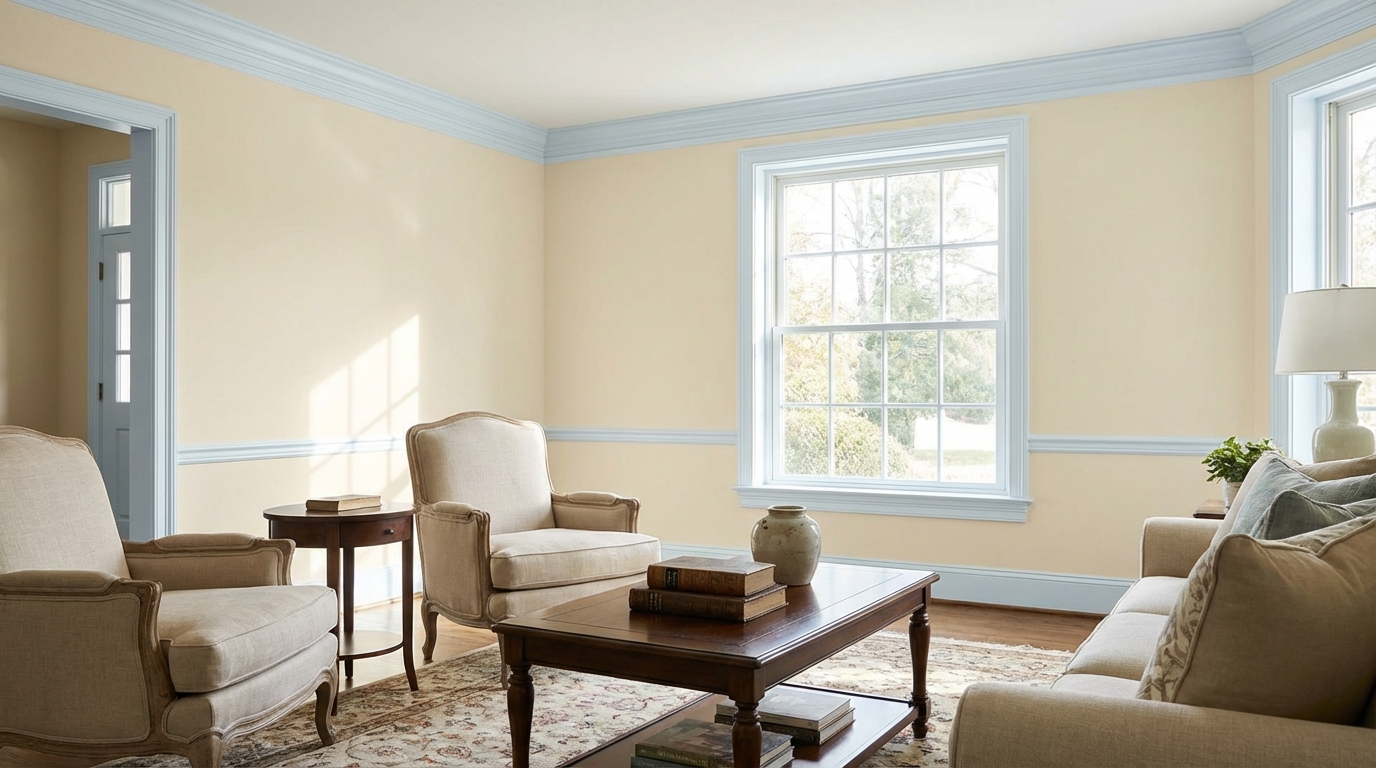
Every white paint has an undertone. There's no such thing as "just white." White paints lean warm (yellow, pink), cool (blue, green), or neutral (gray). Pick wrong, and your white walls will look dirty, pink, or like a hospital corridor.
I spent six months living with the wrong white in my first apartment. Chose "Pure White" thinking pure meant neutral. Under my north-facing light, it read ice blue. Made everything feel cold and sterile. I hated coming home.
Understanding undertones would have saved me that six months.
Why undertones matter more than you think
The wrong white can:
- Look dirty or dingy against your trim
- Clash with your cabinets or floors
- Make warm wood tones look orange
- Give rooms an unintentionally pink or yellow cast
- Feel institutional and cold
The right white:
- Blends with your existing finishes
- Feels clean without being sterile
- Complements your furniture and decor
- Works with your specific lighting
This isn't subtle stuff. Get undertones wrong and you'll know something is off—you just might not know what.
The 5 types of white undertones
1. Yellow/cream undertones (warm whites)
These are the cozy whites. Creamy, buttery, slightly vintage-feeling.
Best for:
- North-facing rooms (counteracts cold light)
- Traditional or farmhouse styles
- Rooms with warm wood tones
- Rooms you want to feel warm and lived-in
Colors I recommend:
- Navajo White OC-95 (Benjamin Moore) — Peachy-cream, very forgiving
- White Flour SW 7102 (Sherwin-Williams) — Subtle butterscotch hint
- Antique White OC-83 (Benjamin Moore) — Classic warm white
Watch out: In south-facing rooms with intense sunlight, these can read very yellow. Almost butter-colored.
2. Pink/peach undertones
Soft and rosy without being obviously pink. These are flattering whites—literally, they make skin tones look better.
Best for:
- Bedrooms where you want softness
- Spaces with cool-toned furniture
- Rooms where people gather (living rooms, dining rooms)
- Warmth without yellowness
Colors I recommend:
- White Dove OC-17 (Benjamin Moore) — The designer favorite, subtle pink
- Pristine OC-75 — Peachy undertone, clean without trying
- First Light 2102-70 — Barely-there blush
Watch out: Under warm incandescent bulbs, pink undertones become more obvious. Test with your actual lighting.
3. Blue undertones (cool whites)
Crisp, clean, modern. These are the "fresh" whites.
Best for:
- South-facing rooms with warm natural light
- Modern and minimalist spaces
- Pairing with cool gray furniture
- A sharp, contemporary feel
Colors I recommend:
- Chantilly Lace OC-65 (Benjamin Moore) — Clean with slight blue, very popular
- Super White PM-1 — About as cool as white gets
- Extra White SW 7006 (Sherwin-Williams) — Bright and cool
Watch out: In north-facing rooms or basements, these look harsh and cold. Almost clinical. I made this mistake—it's depressing.
4. Green/gray undertones
Quiet neutrals that avoid both yellow and pink. These are the "I can't quite figure out what color this is" whites.
Best for:
- Contemporary spaces
- Balancing warm wood floors
- People who hate both pink and yellow undertones
- Going for a calm, deliberate look
Colors I recommend:
- Swiss Coffee OC-45 (Benjamin Moore) — Green-gray lean, very popular
- Alabaster SW 7008 (Sherwin-Williams) — Subtle gray-green, warm-ish
- Greek Villa SW 7551 — Green hint, surprisingly versatile
Watch out: These can look slightly sage or gray in certain lighting. Not bad, just be aware.
5. True neutral (balanced whites)
The closest thing to "no undertone." These adapt to their surroundings.
Best for:
- When you genuinely can't decide
- Uncertain lighting situations
- Rooms that need to work with varied decor
- Playing it safe
Colors I recommend:
- Simply White OC-117 (Benjamin Moore) — The safe choice
- Snowbound SW 7004 (Sherwin-Williams) — Balanced, slightly warm
- Cloud White OC-130 — Clean neutral
How lighting changes everything
Here's the thing that messes everyone up: the same white looks different in different light.
| Light Source | Effect on White |
|---|---|
| North-facing rooms | Emphasizes blue/cool undertones |
| South-facing rooms | Emphasizes yellow/warm undertones |
| East-facing rooms | Warm morning, cool afternoon |
| West-facing rooms | Cool morning, orange afternoon |
| Incandescent bulbs | Makes everything look yellower/warmer |
| Cool LED bulbs (5000K) | Makes everything look bluer/cooler |
| Warm LED bulbs (2700K) | Makes everything look warmer |
The key insight: Your white undertone should counterbalance your lighting.
- North room with cool light → Choose warm white
- South room with warm light → Cool white works fine
I live in a north-facing apartment now. Every white I use has warm undertones. It's non-negotiable.
How to actually test whites
The comparison method
- Get 5-6 white paint chips
- Hold them against pure white paper (printer paper works)
- Suddenly undertones become obvious
- The pink ones look pink, the yellow ones look yellow
This method reveals undertones that are invisible when viewing samples alone.
The wall method
- Paint large samples (12"x12" minimum) on white poster board
- Hold the boards against your actual wall in your actual room
- Check at different times of day—morning, afternoon, evening
- Compare against existing trim, floors, cabinets
Don't skip the different times of day check. A white that looks perfect at 10am might look wrong at 6pm.
The app method
Use Muro to quickly see multiple whites on your walls before narrowing to physical samples. Saves buying eight sample pots only to hate seven of them.
Matching white to your stuff
With warm wood floors
Oak, pine, honey-colored hardwoods need warm whites:
- Navajo White OC-95
- White Flour SW 7102
- Antique White OC-83
Cool whites make warm wood look orange by contrast. It's jarring.
With cool gray floors or furniture
Gray flooring, gray couches, gray everything—use neutral to cool whites:
- Chantilly Lace OC-65
- Snowbound SW 7004
- Simply White OC-117
Yellowy creams will clash and make your gray stuff look purple-ish.
With existing white trim
This is where people mess up constantly. Wall white and trim white need to be from the same undertone family.
- Warm trim + warm walls = cohesive
- Cool trim + cool walls = cohesive
- Warm trim + cool walls = one looks dirty, the other looks wrong
When in doubt: Use the exact same white on walls and trim. The sheen difference (eggshell walls, semi-gloss trim) creates enough visual separation.
The foolproof choices
If you need a safe recommendation:
For warm-leaning versatility: Simply White OC-117 (Benjamin Moore)
- Works in most lighting
- Pairs with most decor
- Not too warm, not too cool
- The "I don't know what to pick" choice
For cool-leaning versatility: Chantilly Lace OC-65 (Benjamin Moore)
- Clean, modern look
- Works in well-lit spaces
- Popular with designers
For true neutral: Snowbound SW 7004 (Sherwin-Williams)
- Minimal undertone
- Adapts to surrounding colors
- Safe for uncertain situations
Mistakes I see constantly
Mistake 1: Assuming white is white
"Just give me white" leads to random results. Every white has an undertone. Accept this first.
Mistake 2: Testing in store lighting
Store lighting lies. It's designed to make paint look good on the chip. Test in your home, in your light.
Mistake 3: Mismatched trim and walls
Cool gray-white trim next to warm cream walls = visual chaos. Keep undertones consistent.
Mistake 4: Too many whites
I've seen homes with five different whites in five rooms. Looks chaotic and accidental. Stick to 1-2 whites maximum.
Mistake 5: Forgetting the ceiling
If your ceiling is painted white, it needs to coordinate with your wall white. Same undertone family, or just use the same color.
Once you see undertones, you can't unsee them
- All whites have undertones. Accept this as fact.
- Match undertone to lighting. Warm rooms handle cool whites; cool rooms need warm whites.
- Match undertone to existing finishes. Wood floors, cabinets, and trim dictate your options.
- Test before committing. The only way to know for sure.
- When in doubt, go neutral. Simply White works almost everywhere.
White paint selection is harder than it looks. But once you understand undertones, it becomes predictable. Know your lighting, test your top choices, and pick the undertone that works with your space.
That cold, sterile apartment I mentioned? Repainted it with White Dove (warm pink undertone). Immediately felt like home. Should have understood undertones from the start.