You need separate primer for bare surfaces, stain coverage, and dramatic color changes. Paint-and-primer-in-one products work fine for repainting over similar colors. The paint companies won't tell you this because they want to sell you the premium combo product for every job.
I learned this the hard way. Tried to cover a fire-engine red accent wall with Agreeable Gray by Sherwin-Williams (SW 7029) using a "paint and primer in one." Four coats later, I could still see pink bleeding through. Bought a $25 can of dedicated primer, did one coat, then two coats of paint. Should have done that from the start.
When you actually need dedicated primer
There are exactly four situations where you need to buy a separate primer. Everything else? The combo products work fine.
1. Bare drywall or new construction
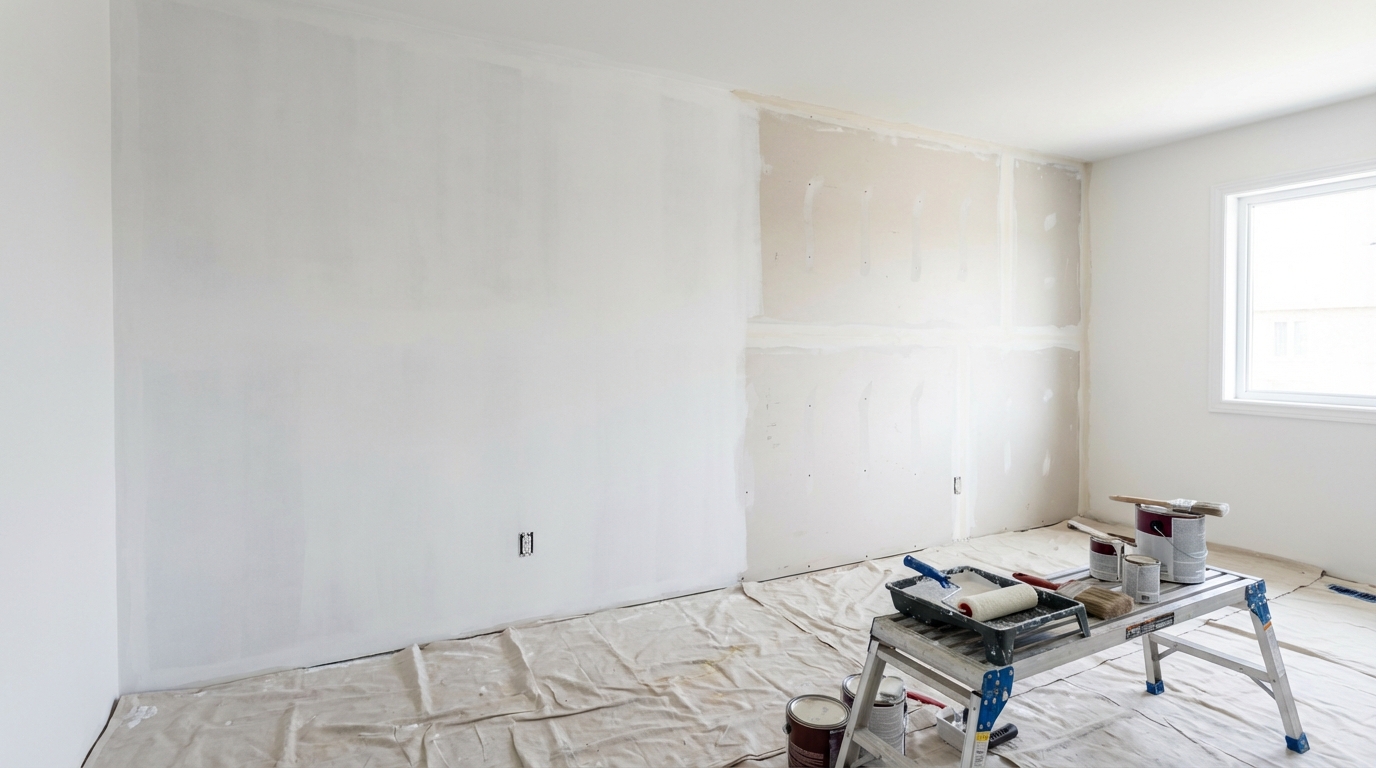
Fresh drywall is porous and thirsty. It will suck the moisture out of your paint unevenly, leaving you with a blotchy mess called "flashing." No amount of extra coats fixes this.
Use: PVA drywall primer (cheapest option that works)
One coat of PVA primer seals the surface and gives your topcoat something uniform to grip. This is non-negotiable. I don't care what the paint can says.
2. Covering stains
Water stains, smoke damage, marker, crayon, grease spots. Regular paint, even the fancy stuff, won't block these. The stain will bleed through. Sometimes it takes a week, but it will happen.
Use: Shellac-based primer (like Zinsser B-I-N) for serious stains, or oil-based primer for water stains
I once painted over what I thought was a small water stain. Used three coats of premium paint. Two weeks later, yellow ring. Had to sand it back and use proper stain-blocking primer.
3. Dramatic color changes
Going from dark to light is the classic case. Hale Navy by Benjamin Moore (HC-154) to Simply White by Benjamin Moore (OC-117)? You need primer. Going from red, orange, or deep purple to anything light? Primer.
Use: Gray-tinted primer for dark-to-light changes (not white primer)
Here's a trick most people don't know: ask the paint store to tint your primer gray, roughly 50% of your final color's depth. Gray primer blocks better than white primer and requires fewer topcoats.
4. Problem surfaces
Glossy paint, oil-based paint you're covering with latex, slick surfaces like laminate or previously painted cabinets. Paint won't stick to these without help.
Use: Bonding primer (like Zinsser Bulls Eye 1-2-3 or KILZ Adhesion)
If you skip this step on glossy surfaces, your new paint will peel. Maybe not today, maybe not next month, but it will peel.
When paint-and-primer-in-one works fine
For everything else, the combo products do their job:
- Repainting over similar colors: Going from Edgecomb Gray by Benjamin Moore (HC-173) to Pale Oak by Benjamin Moore (OC-20)? Same ballpark. Combo works.
- Light to light: White to off-white, beige to greige. No drama here.
- Previously painted walls in good condition: If the old paint is solid, not peeling, and not glossy, you're good.
- Slight color shifts: Warming up a cool gray or cooling down a warm beige.
The paint-and-primer products have more solids and better adhesion than regular paint. They're genuinely useful. They're just not magic.
The real cost comparison
Let's do the math on that red wall I mentioned.
My failed approach:
- 1 gallon "premium paint and primer" at $55
- Needed 4+ coats (ran out, bought second gallon)
- Total: $110, full weekend of work, still had bleed-through
What I should have done:
- 1 quart stain-blocking primer at $25
- 1 gallon regular paint at $40
- Needed: 1 coat primer + 2 coats paint
- Total: $65, half the time, perfect coverage
Primer isn't an extra expense. It's the thing that keeps you from buying twice as much paint.
Primer types explained
| Primer Type | Best For | Dry Time | Cleanup |
|---|---|---|---|
| PVA (latex) | New drywall | 1 hour | Water |
| Shellac-based | Severe stains, odor blocking | 45 min | Denatured alcohol |
| Oil-based | Water stains, wood bleed | 24 hours | Mineral spirits |
| Bonding | Glossy surfaces, tile, laminate | 1 hour | Water |
| Gray-tinted | Dark to light color changes | 1 hour | Water |
Common mistakes
Mistake 1: Using white primer under dark colors
If you're painting Hale Navy by Benjamin Moore (HC-154) or Evergreen Fog by Sherwin-Williams (SW 9130), white primer means more topcoats. Ask for gray-tinted primer instead.
Mistake 2: Thinking "self-priming" means "no prep needed"
Self-priming paint still needs the wall cleaned, holes patched, and glossy surfaces scuffed. It just means you might not need a separate primer coat.
Mistake 3: Not waiting long enough between primer and paint
Most primers say "recoat in 1 hour." That's the minimum. In humid conditions or cooler temps, wait 2-3 hours. Rushing this causes adhesion problems.
Mistake 4: Over-applying primer
One coat is almost always enough. Primer isn't paint. Thick primer coats can actually cause problems, like cracking or poor topcoat adhesion.
Quick decision guide
Ask yourself these questions:
- Is the surface bare (unpainted drywall, raw wood)? Yes = dedicated primer
- Are there stains I need to block? Yes = stain-blocking primer
- Am I going from very dark to very light? Yes = gray-tinted primer
- Is the old paint glossy or oil-based? Yes = bonding primer
- None of the above? Paint-and-primer combo is fine
Save yourself the extra coats
Dedicated primer solves specific problems: sealing porous surfaces, blocking stains, covering dramatic color changes, and helping paint stick to tricky surfaces. If you have one of those problems, buy the primer. It's cheaper than extra paint and frustration.
For normal repaints over similar colors on previously painted walls? The paint-and-primer combos work exactly as advertised. Don't let anyone upsell you on primer you don't need.
And if you're ever painting over red, just start with the primer. Trust me.