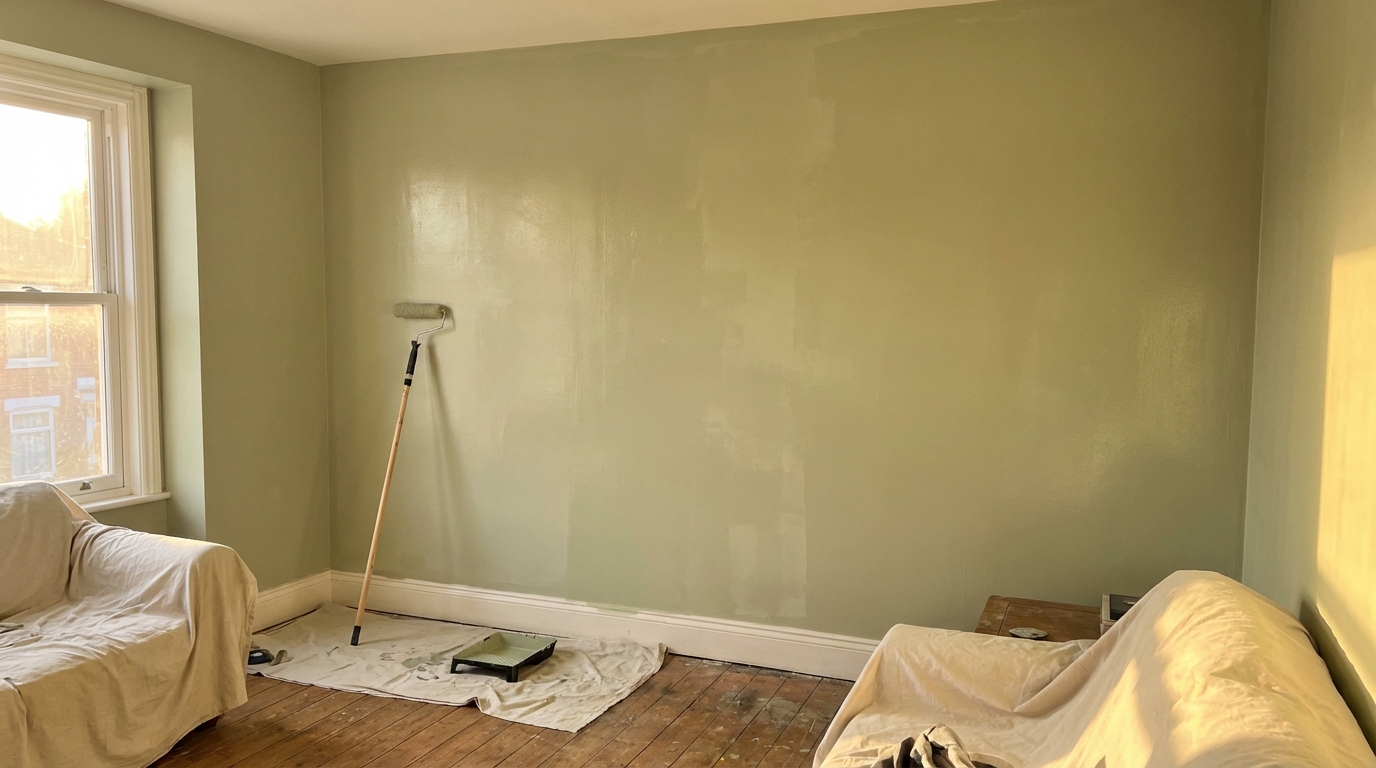
Most latex paints are touch-dry in 1-2 hours, recoat-ready in 4 hours, and fully cured in 30 days. But here's what the paint can doesn't tell you: temperature, humidity, and the finish you chose can double or triple those times.
I ruined a perfectly good paint job because I didn't understand the difference between "dry" and "cured." Moved furniture back against a wall that felt completely dry. Three weeks later, the paint had bonded to my bookshelf. Peeled right off when I moved it. That wall needed a full repaint.
Three stages of drying
Paint doesn't just go from wet to dry. There are three distinct stages, and confusing them is where most DIYers mess up.
Stage 1: Touch dry (surface dry)
The paint feels dry to a light touch. You won't get paint on your finger if you gently press the surface.
Typical time: 30 minutes to 2 hours
What you can do: Nothing much. Don't touch it more than necessary. Don't lean anything against it. Don't let pets or kids near it.
What you can't do: Apply another coat. The surface might feel dry, but underneath it's still wet. Paint over it now and you'll trap moisture, causing bubbling, peeling, or a permanently tacky finish.
Stage 2: Recoat ready (dry to recoat)
The paint is dry enough to accept another coat without issues. This is when you can safely apply your second coat.
Typical time: 2-4 hours for most latex paints
What you can do: Apply your next coat. Remove painter's tape (actually, slightly before this stage is better for clean lines).
What you can't do: Hang anything on the wall. Move furniture against it. Clean or scrub the surface.
Stage 3: Fully cured
The paint has reached its maximum hardness and durability. All the solvents have evaporated and the paint has chemically bonded to the surface.
Typical time: 14-30 days
What you can do: Everything. Clean it, hang pictures, push furniture against it, live your life.
What happens if you don't wait: The paint might dent, scratch, or peel more easily. Heavy items can leave permanent impressions. Cleaning can remove paint or leave marks.
Drying times by finish type
The finish you choose dramatically affects drying time. Glossier finishes take longer because they have more resins and fewer porous particles.
| Finish | Touch Dry | Recoat Ready | Full Cure |
|---|---|---|---|
| Flat/Matte | 30-60 min | 2-3 hours | 14-21 days |
| Eggshell | 1-2 hours | 3-4 hours | 21-30 days |
| Satin | 1-2 hours | 4-6 hours | 30 days |
| Semi-Gloss | 2-4 hours | 6-8 hours | 30 days |
| High-Gloss | 4-8 hours | 16-24 hours | 30+ days |
That's why I recommend satin or eggshell for most rooms. Semi-gloss in kitchens and bathrooms for durability. Save high-gloss for trim where you can wait overnight between coats.
What changes drying time
Temperature
Paint dries through evaporation. Cold slows evaporation. Heat speeds it up, but too much heat causes problems.
Ideal temperature: 50-85°F (10-29°C)
Below 50°F: Paint may not dry properly at all. It can stay tacky indefinitely or develop a chalky, weak finish.
Above 85°F: Paint dries too fast on the surface, trapping moisture underneath. You'll see bubbling, cracking, or brush marks that won't level out.
Real-world tip: If you're painting in a cold room, run a space heater for a few hours before, during, and after painting. Don't point it directly at the wet paint.
Humidity
This is the big one that people underestimate. High humidity means the air is already saturated with moisture, so paint water has nowhere to go.
Ideal humidity: 40-70%
Above 70%: Drying times can double or triple. In extreme humidity (80%+), paint might not dry at all. I've seen paint stay tacky for days in a humid basement.
Below 40%: Paint can dry too fast, similar to high heat. You might see lap marks where wet paint overlaps dried paint.
Real-world tip: Run a dehumidifier in the room while painting and for 24 hours after. It makes a huge difference.
Paint color
Darker colors and deeply saturated colors have more pigment. More pigment means thicker paint and longer drying times.
Painting with Hale Navy by Benjamin Moore (HC-154) or Evergreen Fog by Sherwin-Williams (SW 9130)? Add 25-50% more time to your drying estimates.
Coat thickness
Thicker coats take longer to dry. Much longer. And they're more likely to have problems.
Two thin coats always beat one thick coat. Always. The paint levels better, dries faster, and adheres stronger.
If you can see the old color through your first coat, that's fine. That's what the second coat is for. Don't try to get full coverage in one pass.
Common mistakes
Mistake 1: "It feels dry"
I mentioned my bookshelf disaster. Here's why it happened: latex paint can feel completely dry to the touch while still being soft enough to bond with other surfaces.
The rule: Wait the full cure time (or at least a week) before placing furniture against walls or hanging heavy items.
Mistake 2: Painting in the morning, recoating at night
Sounds reasonable, right? Paint in the morning, let it dry all day, second coat after dinner.
Problem: evening humidity is usually higher. Temperature is dropping. Your first coat might be ready, but your second coat will take forever to dry.
Better approach: Paint early morning, recoat early afternoon when temperature and humidity are optimal.
Mistake 3: Not checking the weather
I once painted my living room on a day when a cold front was coming through. Started at 70°F, dropped to 45°F by evening. The paint dried weird, blotchy patches where different sections dried at different rates.
The rule: Check the forecast for the full drying period, not just painting day.
Mistake 4: Closing windows too soon
You want to keep dust out, I get it. But paint needs airflow to dry properly. Those fumes you're trying to escape? They're carrying away the water and solvents that need to evaporate.
Keep windows open (or at least cracked): For at least 24 hours after painting. Run a fan if you can.
Mistake 5: Removing tape at the wrong time
Painter's tape should come off while the paint is still slightly tacky, before the recoat stage. Wait too long and the paint forms a film over the tape edge, then tears when you pull.
Best time: About 1 hour after painting, when touch-dry but not hard.
Pull at a 45-degree angle, slowly. If paint starts to peel with the tape, stop. Score the edge with a razor blade first.
How to speed up drying (safely)
Sometimes you need things to dry faster. Here's what actually works without ruining your paint job.
Use fans: Point a box fan at the wall from across the room. Don't blast it directly at close range.
Run a dehumidifier: Especially in basements, bathrooms, or humid climates.
Increase temperature: To 75-80°F if possible. But don't go above 85°F.
Apply thinner coats: The single most effective thing you can do.
Choose a faster-drying paint: Some premium paints are formulated for faster recoat times. Check the can.
What doesn't work: Hair dryers, heat guns, or pointing heaters directly at the paint. These cause the surface to skin over while the underneath stays wet.
Drying times for specific projects
Interior walls
Most people are painting walls with latex eggshell or satin.
- Between coats: 4 hours minimum
- Remove tape: 1 hour after second coat
- Light use: 24-48 hours
- Full durability: 30 days
Kitchen and bathroom (semi-gloss)
Higher humidity means you need more time here.
- Between coats: 6-8 hours
- Remove tape: 2 hours after last coat
- Light use: 48-72 hours
- Run shower/cook: 7 days
- Full durability: 30 days
Cabinets and trim
These get touched and bumped constantly. Patience pays off.
- Between coats: 8-24 hours (overnight is safer)
- Handle gently: 3-4 days
- Full use: 7-14 days
- Maximum durability: 30 days
Dry vs. cured
"Dry" and "cured" are not the same thing. Most paint feels dry in a few hours but doesn't reach full durability for 2-4 weeks.
For recoating: wait the time on the can, or longer in cold or humid conditions. For living with the paint: wait at least 24-48 hours before light use, a full week before real use, and a month before you test its limits.
And if you're not sure? Wait longer. Nobody ever ruined a paint job by being too patient.