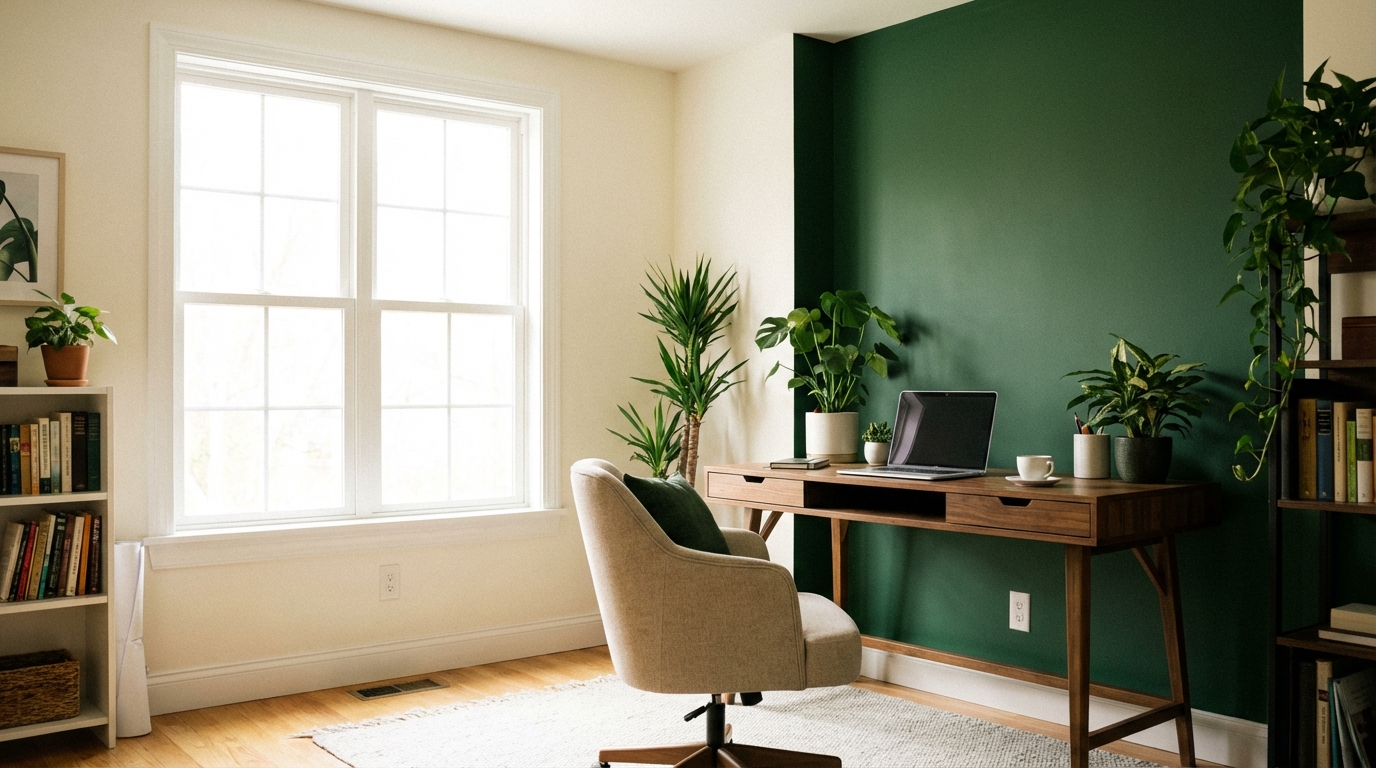
Low-stimulation colors in the blue-green range boost focus, while high-LRV neutrals (above 60) prevent eye strain during long screen hours. The worst thing you can do is paint your home office like a casino, all bright reds and energizing oranges. You'll feel alert for an hour, then burned out.
I spent two years working in a home office painted "Sunflower Yellow." Thought it would be energizing and motivating. Instead, I felt wired but not focused, always slightly on edge. Repainted it a soft sage green. Immediately noticed I could concentrate longer and felt less drained at the end of the day.
What color psychology says about work
Colors affect our brains in measurable ways:
Blue: Helps focus, keeps you calm, reduces mental fatigue. Best for analytical work.
Green: Reduces eye strain, feels natural, easy to work around for hours.
Gray and neutrals: Non-distracting, professional, lets you focus on the work not the walls.
Yellow: Stimulating in small doses but exhausting over time. Better as an accent than a wall color.
Red and orange: Energizing and attention-grabbing. Fine for short bursts, terrible for sustained focus.
Best colors for focus
Soft blue-greens
The sweet spot for productivity. Blue for focus, green for reduced eye strain.
Top picks:
Sea Salt by Sherwin-Williams (SW 6204) - A soft blue-green, very easy to concentrate around
Rainwashed by Sherwin-Williams (SW 6211) - Slightly more blue, very calming
Silver Sage by Benjamin Moore (2150-40) - Muted blue-gray, not too warm or cool
Quiet Moments by Benjamin Moore (1563) - Pale blue-gray, very non-distracting
Sage and muted greens
Green reduces eye fatigue, which matters when you're staring at screens all day.
Top picks:
Softened Green by Sherwin-Williams (SW 6177) - A true soft sage
Saybrook Sage by Benjamin Moore (HC-114) - Classic, not too green
Clary Sage by Sherwin-Williams (SW 6178) - Deeper with warmth
Prescott Green by Benjamin Moore (HC-140) - Gray-green, very professional
Warm neutrals for video calls
Here's something most people don't consider: your wall color shows up on camera. Cool grays can make you look washed out. Warm neutrals photograph better.
Top picks for the wall behind your desk:
Agreeable Gray by Sherwin-Williams (SW 7029) - Flattering on camera
Accessible Beige by Sherwin-Williams (SW 7036) - Warm but not yellow
Pale Oak by Benjamin Moore (OC-20) - Professional and warm
Edgecomb Gray by Benjamin Moore (HC-173) - Polished greige
LRV and eye comfort
When you're working at a computer, your eyes constantly adjust between the bright screen and your surroundings. If that contrast is too extreme, you get eye strain, headaches, and fatigue.
What works: Walls with LRV between 50-70.
Too dark (LRV below 40): Creates harsh contrast with your screen. Your pupils are constantly adjusting.
Too bright (LRV above 80): Can create glare, especially with natural light. Also fatiguing.
The 50-70 range gives enough ambient light without causing strain.
Colors to avoid in home offices
Bright, saturated colors
Fire-engine red: Increases heart rate, creates urgency. You'll feel stressed, not focused.
Bright orange: Too stimulating for sustained work. Save it for the gym.
Vivid yellow: Energizing at first, exhausting over hours. I speak from experience.
Hot pink or magenta: Attention-grabbing in a way that distracts from work.
Very dark colors
Deep navy or charcoal: Can feel oppressive during long work days. Also makes small offices feel smaller.
Black accent walls: Too much visual contrast with screens.
Pure white
Stark white walls: Creates glare, especially with natural light. Cold and clinical, which isn't motivating for most people.
If you want white, choose a soft warm white with LRV around 80, not 95+.
Video call colors
If you take video calls, your wall color matters for how you appear on screen.
What looks good on camera:
- Warm neutrals (greige, soft beige, warm gray)
- Muted blue-greens
- Soft sage
What looks bad on camera:
- Cool grays (make you look pale or sick)
- Bright whites (blown out, clinical)
- Busy patterns or dark colors (distracting)
Pro tip: Take a test video call after painting. Check how you look in different lighting conditions throughout the day.
Small home office strategies
If your home office is small (under 100 square feet), color choices matter even more.
To make it feel larger:
- Light colors with LRV above 60
- Consistent color on all walls (no accent walls)
- White or pale ceiling
To make it feel cozy without being cramped:
- Mid-tone colors (LRV 45-60)
- Warm undertones
- One shade lighter on the ceiling
To maximize focus in a small space:
- Muted, non-distracting colors
- Avoid dark accent walls that visually shrink the room
- Good lighting is more important than wall color
My home office color journey
Attempt 1: Bright Yellow Thought it would be motivating. Instead, felt overstimulated and irritable. Couldn't focus for long periods.
Attempt 2: Cool Gray Better, but the room felt cold and uninspiring. The gray also looked bad on video calls.
Attempt 3: Softened Green by Sherwin-Williams (SW 6177) Perfect. Calm but not boring. Focus improved noticeably. Looks great on camera. No eye strain after long days.
The right color doesn't make you more productive by magic. It just stops the walls from getting in the way.
Quick guide by work type
Analytical work (coding, accounting, research):
Best: Blue and blue-gray tones Why: Helps with logical thinking and sustained concentration
Creative work (design, writing, brainstorming):
Best: Soft greens and blue-greens Why: Balances calm with creative stimulation
Communication-heavy work (sales, meetings, calls):
Best: Warm neutrals Why: Looks good on camera, feels welcoming
Mixed work (most people):
Best: Sage green or warm gray Why: Versatile, non-distracting, photographs well
Should you do an accent wall?
Should you have an accent wall in a home office?
Generally, no. An accent wall creates a focal point, and in a workspace, you want your work to be the focal point, not the wall.
Exception: If the accent wall is behind you (what shows on video calls), a slightly deeper version of your main color can add visual interest without distraction.
Don't forget lighting
Color is only half the equation. Lighting matters just as much.
- Natural light: Best for productivity and mood. Position your desk to get it without glare on your screen.
- Warm artificial light (2700-3000K): More comfortable for long work sessions.
- Task lighting: Reduces eye strain by illuminating your work area specifically.
The best wall color in the world won't help if your lighting is terrible.
What actually works
Blue-greens and sage tones promote focus. Warm neutrals look good on camera and don't distract. Avoid anything too stimulating (bright colors) or too draining (very dark colors).
LRV matters: aim for 50-70 to reduce eye strain and maintain comfortable ambient light.
And whatever you do, don't paint your home office bright yellow. Trust me.