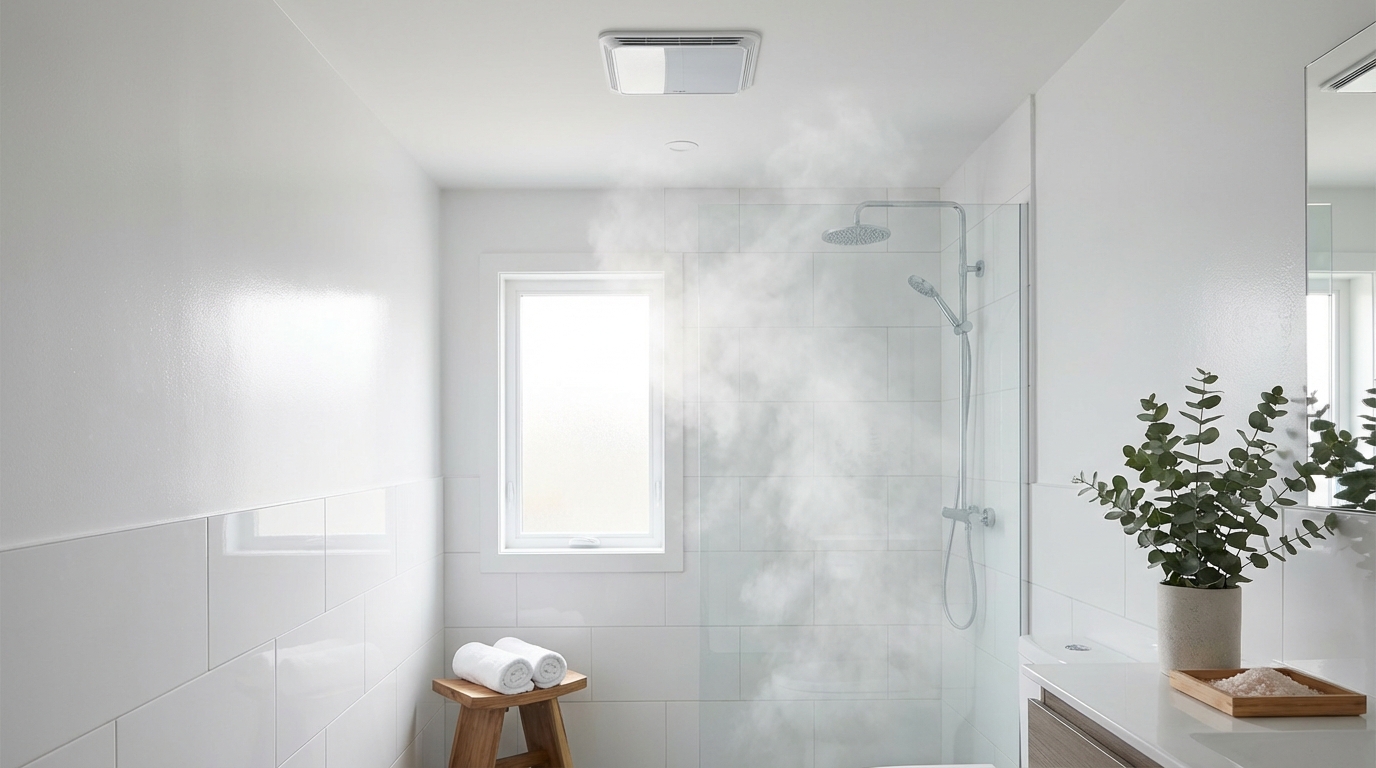
Any good quality satin or semi-gloss paint works in most bathrooms. You only need specialized "bathroom paint" if you have poor ventilation or persistent moisture problems. The paint companies want you to think you need their premium bathroom formula for every bathroom. You usually don't.
I learned this after buying expensive mold-resistant paint for a bathroom with a great exhaust fan and a window. Complete overkill. Regular semi-gloss would have worked just as well. Meanwhile, I used regular paint in a basement half-bath with terrible ventilation. Mold appeared within six months. That bathroom actually needed the specialty paint.
When you need specialty bathroom paint
Poor ventilation
If your bathroom doesn't have a working exhaust fan AND a window, moisture hangs around after showers. This is where mold-resistant paint earns its premium price.
Signs of poor ventilation:
- Mirror stays fogged for more than 10 minutes after showering
- Walls feel damp to the touch after bathing
- Musty smell that doesn't go away
- Previous mold problems
No exhaust fan
Some older homes have bathrooms with just a window. In winter, you're not opening that window. Moisture has nowhere to go.
Basement or interior bathrooms
No windows, often minimal air circulation. These are high-risk for moisture problems.
Shower-only bathrooms
Showers produce more steam than tubs. Small bathrooms with just a shower need more moisture protection.
When regular paint works fine
Good ventilation
If you have a functioning exhaust fan that you actually use, plus reasonable airflow, regular satin or semi-gloss paint handles bathroom conditions just fine.
Powder rooms
Half-baths with just a toilet and sink see minimal moisture. No special paint needed. You could use eggshell here if you wanted.
Well-ventilated primary bathrooms
Large bathrooms with windows AND exhaust fans rarely have moisture problems. The steam dissipates before it can cause issues.
Finish matters more than formula
Here's what the paint companies don't emphasize: the finish (sheen) is more important than whether it says "bathroom" on the can.
Why glossier finishes work better
Satin, semi-gloss, and gloss finishes:
- Create a harder, less porous surface
- Easier to wipe clean
- Resist moisture penetration
- Don't absorb steam as readily
Flat and matte finishes:
- More porous surface
- Absorb moisture
- Harder to clean
- More likely to develop mold
The minimum for bathrooms
At minimum, use satin finish in any bathroom. Eggshell is borderline, only in powder rooms with good ventilation.
For shower areas, ceilings, and high-moisture zones, semi-gloss is safer.
What makes bathroom paint different
"Bathroom paint" typically includes mildewcide (chemicals that inhibit mold and mildew growth — this is the main difference), higher resin content that creates a harder, more washable surface, and moisture resistance additives that help prevent water penetration.
These features matter in challenging environments. In a well-ventilated bathroom, they're nice-to-have, not need-to-have.
The best bathroom colors
Color choice matters for how bathrooms feel, not just for mold resistance.
Light and bright
Light colors make small bathrooms feel larger and help you see what you're doing.
Good choices:
Simply White by Benjamin Moore (OC-117) - Clean and crisp
Sea Salt by Sherwin-Williams (SW 6204) - Soft blue-green, spa-like
Pale Oak by Benjamin Moore (OC-20) - Warm, flattering neutral
Calming spa tones
If you want a relaxing, spa-like atmosphere:
Good choices:
Silver Sage by Benjamin Moore (2150-40) - Muted blue-gray
Rainwashed by Sherwin-Williams (SW 6211) - Soft blue-green
Gray Owl by Benjamin Moore (OC-52) - Versatile gray
Bold and dramatic
Yes, you can go dark in a bathroom, but:
- Make sure you have good lighting
- Use semi-gloss to reflect light
- Works better in larger bathrooms
Good choices for drama:
Hale Navy by Benjamin Moore (HC-154) - Deep and moody
Iron Ore by Sherwin-Williams (SW 7069) - Nearly black, very striking
Evergreen Fog by Sherwin-Williams (SW 9130) - Moody green
Colors to approach carefully
Pure white
Bright white shows every water spot, soap scum, and imperfection. It can also feel cold and clinical.
If you want white, choose a soft warm white rather than stark pure white.
Very dark colors
In small, poorly lit bathrooms, dark colors can feel oppressive. They also show dust and soap residue more than you'd expect.
My bathroom paint mistakes
Mistake 1: Flat paint in a bathroom Early rental, didn't know better. Within a year, the ceiling had mold spots and the walls looked dirty even when clean.
Mistake 2: Expensive bathroom paint where I didn't need it Primary bathroom with great ventilation. The $65/gallon bathroom paint was no different than regular paint would have been.
Mistake 3: Not painting the ceiling Bathroom ceilings see the most moisture. If you're painting the walls, paint the ceiling too, with the same or better finish.
Proper bathroom painting process
1. Address moisture problems first
Painting over mold doesn't fix mold. Before painting:
- Fix any leaks
- Clean existing mold with proper mold remover
- Ensure ventilation works
- Let surfaces dry completely
2. Use mold-killing primer if needed
If you've had mold, use a mold-blocking primer before painting. This actually matters more than mold-resistant paint.
3. Choose the right finish
- Walls: Satin minimum, semi-gloss preferred
- Ceiling: Semi-gloss (catches the most steam)
- Trim: Semi-gloss or gloss
4. Proper ventilation during and after
Run the exhaust fan while painting and for 24+ hours after. Bathrooms need airflow for paint to cure properly.
Quick decision guide
Use regular satin/semi-gloss if:
- Working exhaust fan
- Window you actually open
- No history of mold
- Powder room/half-bath
Use bathroom-specific paint if:
- Poor ventilation
- No exhaust fan
- Previous mold problems
- Basement or interior bathroom
- Shower-only bathroom
Always use semi-gloss on:
- Bathroom ceilings
- Areas directly exposed to shower steam
- Trim and woodwork
Quick recap
Most bathrooms don't need specialty mold-resistant paint. Good ventilation plus satin or semi-gloss finish handles normal bathroom moisture.
Save the expensive bathroom paint for genuinely challenging situations: poor ventilation, no exhaust fan, basement bathrooms, or spaces with mold history.
Finish matters more than formula. Semi-gloss on ceilings, satin minimum on walls. And whatever you do, don't use flat or matte finish in any bathroom.
The real solution to bathroom mold is ventilation. Paint is the backup plan, not the primary defense.