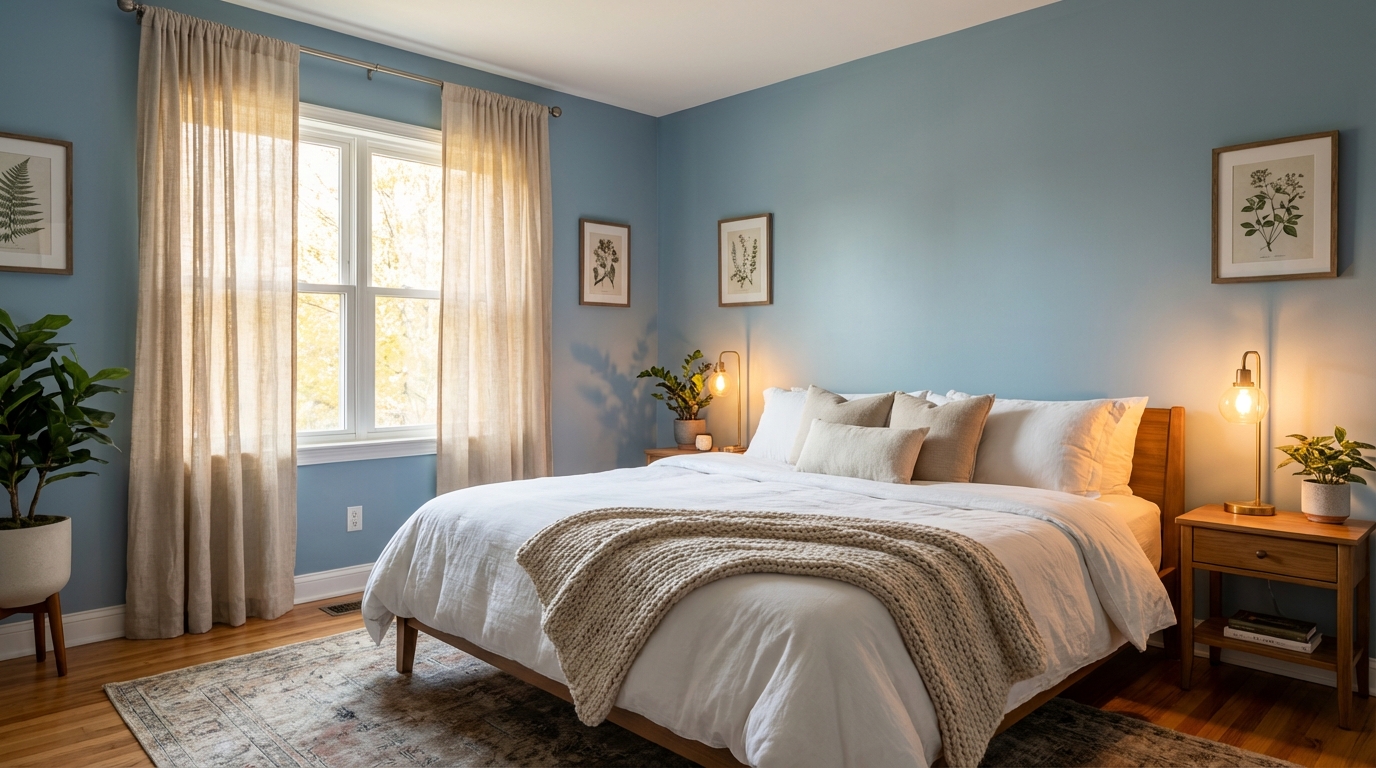
Blue, green, and warm neutrals with LRV between 50-70 consistently test best for sleep quality. The research is pretty clear on this: cool, muted colors help your brain transition to sleep mode. Bright whites, energizing yellows, and saturated reds do the opposite.
I used to have a bright white bedroom. Thought it looked clean and modern. Also couldn't fall asleep easily and woke up feeling like I hadn't rested. Repainted it a soft blue-gray, same furniture, same bedding. Fell asleep faster and actually stayed asleep. Coincidence? Maybe. But the sleep research backs up what I experienced.
What the research says
Several studies have looked at bedroom color and sleep quality. The findings are consistent:
Blue bedrooms: People with blue bedrooms report the best sleep, averaging nearly 8 hours per night. Blue is associated with calm, lowers heart rate, and doesn't stimulate the brain.
Green bedrooms: Second best for sleep. Green connects to nature and relaxation. It's easy on the eyes and doesn't create visual tension.
Gray bedrooms: Neutral grays work well, especially warmer grays. Cool grays can feel too cold and clinical.
Purple and brown: Surprisingly, these colors correlated with less sleep in some studies. Purple can be stimulating, and brown can feel heavy or depressing.
Red and orange: Worst for sleep. These colors are energizing by nature. They raise heart rate and create alertness, exactly what you don't want at bedtime.
The best bedroom colors
Soft blues
Blue is the undisputed champion of bedroom colors. But not just any blue.
What works:
- Muted, grayish blues
- Pale sky blues
- Soft slate blues
- LRV range: 50-70
What doesn't work:
- Bright, saturated blues (too stimulating)
- Very dark navy (can feel heavy)
- Blue with strong purple undertones (activating)
Top picks:
Sea Salt by Sherwin-Williams (SW 6204) - A soft blue-green that reads calm and serene
Silver Sage by Benjamin Moore (2150-40) - Muted blue-gray with gentle warmth
Quiet Moments by Benjamin Moore (1563) - Pale blue-gray, very calming
Sleepy Blue by Sherwin-Williams (SW 6225) - The name says it all
Soft greens
Green connects us to nature, which our brains associate with safety and relaxation.
What works:
- Sage greens
- Muted olive tones
- Soft gray-greens
- LRV range: 45-65
What doesn't work:
- Bright lime or kelly green
- Very dark forest green
- Green with strong yellow undertones
Top picks:
Saybrook Sage by Benjamin Moore (HC-114) - Classic sage, not too green
Softened Green by Sherwin-Williams (SW 6177) - Muted and calming
Clary Sage by Sherwin-Williams (SW 6178) - Deeper sage with warmth
Silver Marlin by Benjamin Moore (2139-50) - Gray-green, very soothing
Warm neutrals
If blue and green feel too "colored" for you, warm neutrals work beautifully.
What works:
- Greige (gray-beige)
- Warm gray
- Soft taupe
- Creamy off-whites
- LRV range: 55-75
What doesn't work:
- Cool, stark white (too clinical)
- Yellow-beige (can feel dated and restless)
- Dark charcoal (too heavy for sleep)
Top picks:
Agreeable Gray by Sherwin-Williams (SW 7029) - The perfect warm gray
Pale Oak by Benjamin Moore (OC-20) - Warm greige, very restful
Edgecomb Gray by Benjamin Moore (HC-173) - Refined neutral
Accessible Beige by Sherwin-Williams (SW 7036) - Warm without being yellow
Colors to avoid in bedrooms
Bright white
White seems like a safe choice, but pure white bedrooms can feel:
- Clinical (like a hospital)
- Too bright in morning light
- Cold and unwelcoming
- Harsh on the eyes when you're waking up
If you want white, go for soft, warm whites with LRV around 80-85, not 95+.
Energizing colors
Reds and oranges: These colors raise heart rate and stimulate the nervous system. Great for a home gym, terrible for sleep.
Bright yellows: While warm, bright yellow is energizing and activating. You'll feel awake, which is the opposite of the goal.
Hot pinks and magentas: Stimulating and attention-grabbing. Not relaxing.
Very dark colors
Deep navy, charcoal, and black can feel:
- Cave-like and oppressive
- Heavy and depressing
- Like the walls are closing in
If you want dark and moody, keep it to an accent wall behind the headboard where you won't see it while falling asleep.
Colors with high saturation
The hue matters less than the intensity. A muted sage green is calming. A saturated emerald green is stimulating.
For bedrooms, always lean toward muted, dusty, or grayed-down versions of colors.
The LRV factor
LRV (Light Reflectance Value) matters for bedrooms. Here's why:
Too high (85+): The walls reflect too much light, making the room feel bright and active, especially in the morning.
Too low (below 40): The room feels dark and closed in, which some find comforting but others find oppressive.
The sweet spot (50-70): Enough light reflection to feel open and airy, but soft enough to feel restful.
This is why soft, muted colors work better than either bright whites or deep darks.
What about the accent wall?
If you want color in your bedroom, put it behind the headboard. This is the one wall you don't see while lying in bed.
Good accent wall colors for bedrooms:
- Deeper versions of your main wall color
- Moody blue-greens
- Soft charcoals
- Muted navy
Keep the walls you see while in bed in calming, light neutrals or soft colors.
Ceiling color matters too
Most people paint ceilings white by default. In bedrooms, consider:
Same color as walls (slightly lighter): Creates a cocoon effect that can feel very restful.
Soft warm white: Slightly warmer than pure white to avoid the clinical feel.
Very pale blue: An old trick that makes the ceiling feel like sky. Surprisingly soothing.
Avoid pure white ceilings if your walls are warm colors, as the contrast can feel jarring.
My bedroom color journey
I've tested three bedroom colors over the years:
First apartment: Bright white Looked modern but felt like sleeping in a hospital room. Took forever to fall asleep. Morning light was blinding.
Second place: Pale gray (too cool) Better, but the gray had blue undertones that made it feel cold in winter. Never felt cozy.
Current bedroom: Sea Salt by Sherwin-Williams (SW 6204) The perfect soft blue-green. Feels calm without being boring. Warm enough to be cozy, cool enough to be restful. Best sleep I've ever had.
The color was $50 in paint. The improvement in sleep quality was priceless.
Quick guidelines
For falling asleep faster:
- Blue and blue-green tones
- LRV 50-65
- Matte or eggshell finish (less light reflection)
For staying asleep:
- Avoid colors that are too stimulating
- Keep accent colors behind you
- Make sure morning light doesn't bounce harshly
For waking up rested:
- Warm undertones in your neutral
- Not too dark (avoid the cave effect)
- Soft, not stark
Worth the $50 experiment
Your bedroom should help you sleep, and color plays a bigger role than most people think. Blue and green test best across all the research. Warm neutrals work well too. Avoid bright whites, energizing colors, and anything too saturated.
LRV matters. Aim for 50-70 for the best balance of open and restful.
And if you've been struggling with sleep in a bright white or bold-colored bedroom? It might be worth the $50 experiment. A new paint color is a lot cheaper than sleep supplements and weighted blankets.