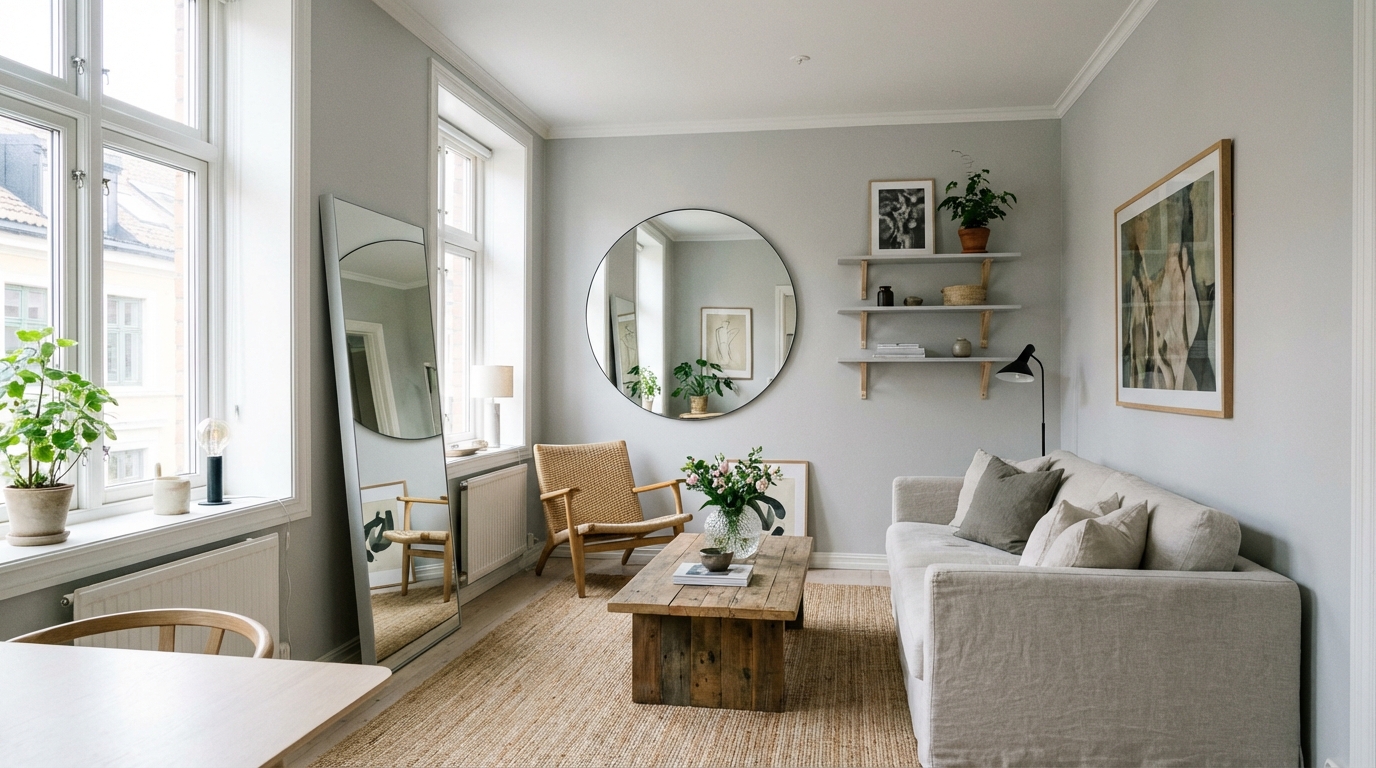
Short answer: Light colors with high LRV (Light Reflectance Value) above 50. Whites, creamy off-whites, and pale grays work best. But here's the thing—it's not just about picking "white" and calling it a day.
I learned this the hard way when I painted my 10x10 home office "Swiss Coffee" without checking the LRV. Looked great on the chip. On my north-facing walls with one tiny window? It read as dirty yellow. The room felt smaller than before.
So let's break down what actually works.
Why light colors make rooms feel bigger
It comes down to physics. When light hits your wall, the paint either absorbs it or bounces it back. Dark colors absorb most of the light—that's why basement bars and speakeasies use deep colors. They're meant to feel intimate, enclosed.
Light colors do the opposite. They reflect light back into the room, and your brain interprets brighter surfaces as being further away. It's the same reason hospital corridors feel endless even when they're not that long.
The key metric is LRV (Light Reflectance Value):
- 0 = pure black (absorbs all light)
- 100 = pure white (reflects all light)
For a small room, you want colors with LRV above 50. Above 70 if you really want to maximize the effect.
The best paint colors for small rooms
I've tested dozens of colors in small spaces. Here are the ones that consistently work:
1. Simply White by Benjamin Moore (OC-117)
LRV: 91.7
Designers pick this one constantly, and for good reason. It's warm enough to not feel clinical, bright enough to bounce light everywhere. Works in basically any lighting condition.
Best for: Rooms with limited natural light, bedrooms where you want a clean but cozy feel.
2. Alabaster by Sherwin-Williams (SW 7008)
LRV: 82
A creamy, soft white that's more forgiving than pure white. The slight warmth keeps it from looking stark, especially under artificial lighting at night.
Best for: Living rooms, offices, anywhere you spend time after sunset.
3. Classic Gray by Benjamin Moore (OC-23)
LRV: 74.7
For people who think white is boring. This warm gray has enough color to feel intentional, but it's still light enough to open up a space. Pairs beautifully with white trim.
Best for: Modern spaces where you want depth without sacrificing light.
4. Sea Salt by Sherwin-Williams (SW 6204)
LRV: 63
This blue-green gray shows up everywhere on Pinterest for a reason. It adds personality without closing in the walls. The color shifts depending on lighting—more blue in daylight, more gray at night.
Best for: Bathrooms, coastal-style bedrooms, rooms with good natural light.
5. Pale Oak by Benjamin Moore (OC-20)
LRV: 69.9
A greige (gray + beige) that feels current without being trendy. The neutral undertone means it won't fight with your furniture.
Best for: Spaces where you're not sure what direction your decor will go.
What about the ceiling?
Here's a trick most people miss: paint your ceiling the same color as your walls.
When you use the same light color on both surfaces, your eye doesn't register the boundary as clearly. Instead of seeing a box with six distinct surfaces, the room reads as one continuous space.
This works especially well with ceilings under 9 feet.
Colors to avoid in small rooms
Some colors just don't work in tight spaces:
- Deep navy or charcoal (LRV under 10) — walls will feel like they're advancing toward you
- Dark reds and burgundies — absorb too much light, can feel oppressive
- Forest green — beautiful in large spaces, cave-like in small ones
- Chocolate brown — makes any small room feel cramped
The one exception: a single dark accent wall. If three walls are light and one is dark, the dark wall can actually add depth. But this only works if you have enough light coming from the other walls.
How to actually pick the right color
Here's the thing about paint chips—they lie. A 2-inch chip under store lighting tells you almost nothing about how a color will look on your 200-square-foot walls.
Option 1: Buy sample pots. Paint a 2x2 foot section and live with it for a few days. Check it in morning light, afternoon light, and artificial light at night. This is the traditional way, and it works.
Option 2: Use Muro. I built this app specifically because I was tired of the sample pot dance. Take a photo of your actual room, pick a color from any major paint brand (Sherwin-Williams, Benjamin Moore, Behr—we have 27,000+ colors), and see it on your walls instantly.
The visualization preserves your room's lighting and shadows, so you get a realistic preview. I've saved myself dozens of $8 sample pots since I started using it.
Keep it light, test before you commit
For small rooms: stick to colors with LRV above 50 (above 70 for the strongest effect). Whites and off-whites give you the most space-expanding power, but light grays and pale blue-greens work too.
Don't trust the paint chip. Test before you commit, whether that's with samples on your wall or with an app that shows you the real result.
And remember—the room isn't going to get any bigger. But the right color can make it feel like it did.