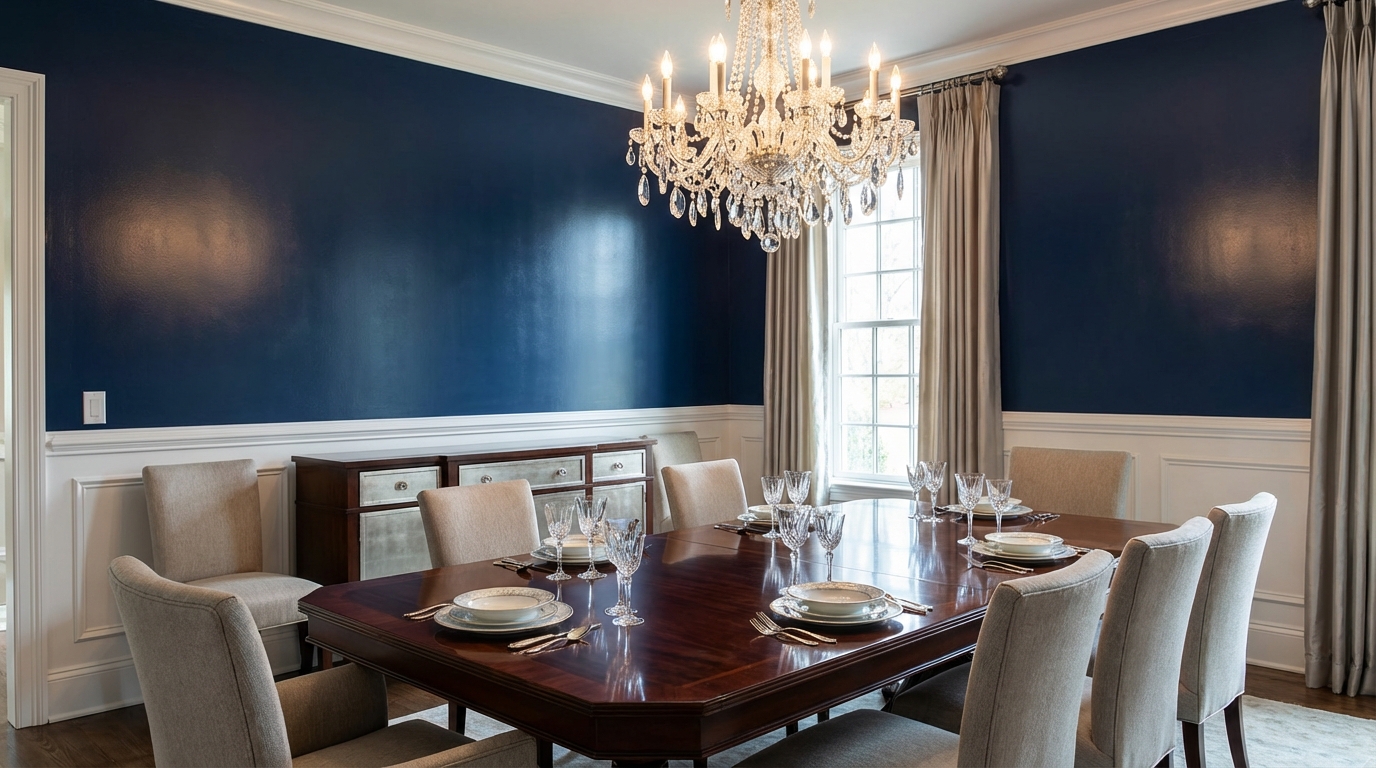
The short answer: eggshell on walls, semi-gloss on trim. That combination works for 90% of homes. But there's nuance here, and getting finish wrong can ruin an otherwise great paint job.
I learned this lesson the expensive way. Painted my first apartment's living room walls in semi-gloss because I thought "more durable" meant "better." The walls looked like they were wrapped in plastic. Every bump, patch, and drywall imperfection—and there were many—shone like beacons. Had to repaint the entire room.
Let's break down each finish so you don't make the same mistake.
The quick reference
| Finish | Sheen | Hides Imperfections | Durability | Best For |
|---|---|---|---|---|
| Flat/Matte | 0-5% | Excellent | Low | Ceilings, low-traffic rooms |
| Eggshell | 10-25% | Good | Medium | Most walls |
| Satin | 25-35% | Fair | Medium-High | Kitchens, baths, kids' rooms |
| Semi-Gloss | 35-70% | Poor | High | Trim, doors, cabinets |
| High-Gloss | 70-90% | Very Poor | Very High | Specialty accents only |
Flat/Matte: The ceiling standard
Flat finish absorbs light instead of reflecting it. Zero shine. Looks smooth and velvety. Hides wall imperfections better than any other finish.
Here's the thing: flat paint is gorgeous but impractical for most living situations.
What flat gets right:
- Completely hides bumps, patches, and texture inconsistencies
- Creates a soft, polished appearance
- No glare or shiny spots
- Touch-ups blend in seamlessly
What flat gets wrong:
- Marks easily (a brushed shoulder leaves a mark)
- Nearly impossible to clean (wiping makes it worse)
- Shows fingerprints on dark colors
- Collects dust that can't be wiped away
Use flat finish for:
- Ceilings (always—this is non-negotiable)
- Adult bedrooms with minimal traffic
- Formal dining rooms you don't use daily
- Walls with imperfections you can't repair
Skip flat finish for:
- Anywhere kids or pets exist
- Kitchens (grease splatters = permanent damage)
- Bathrooms (humidity + flat = mold trap)
- Hallways (constant brushing against walls)
I use flat exclusively on ceilings. Nowhere else. The maintenance nightmare isn't worth the aesthetic payoff on walls.
Eggshell: The default choice
Eggshell has a subtle sheen—like the surface of an egg. It's the most popular wall finish for good reason: it balances appearance and durability.
What eggshell gets right:
- Hides most imperfections (not all, but most)
- Actually cleanable with a damp cloth
- Looks elegant without being shiny
- Versatile across room types
What eggshell gets wrong:
- Touch-ups can be visible
- Not durable enough for high-traffic abuse
- Still shows major wall flaws
Use eggshell for:
- Living rooms
- Bedrooms
- Dining rooms
- Home offices
- Any room with moderate traffic
My rule: When in doubt, choose eggshell. It's the safe choice that almost never disappoints. I've painted dozens of walls in eggshell and regretted zero of them.
Satin: The durable workhorse
Satin has a soft pearl-like sheen with more light reflection than eggshell. It's noticeably more durable and much easier to clean.
I switched my kitchen to satin after years of eggshell, and the difference is real. I can actually wipe down walls when cooking splatters happen.
What satin gets right:
- Very cleanable (wipe with damp cloth, problem solved)
- Resists moisture well
- Handles high traffic without showing wear
- Adds subtle visual interest
What satin gets wrong:
- Shows wall imperfections more than eggshell
- Application technique matters (roller marks visible if sloppy)
- Touch-ups more noticeable
Use satin for:
- Kitchens (essential)
- Bathrooms (essential)
- Kids' rooms (non-negotiable)
- Hallways and stairwells
- Laundry rooms
- Any high-touch area
Satin vs. eggshell decision: If the room sees moisture, grease, fingerprints, or frequent touching, upgrade to satin. The extra sheen is worth the cleanability.
Semi-gloss: Trim territory
Semi-gloss is noticeably shiny. It reflects significant light and creates a hard, durable surface.
Here's the critical rule: semi-gloss is for trim, not walls.
I've seen homeowners paint entire bathrooms in semi-gloss thinking "waterproof = good." No. Semi-gloss on walls turns every drywall imperfection into a highlighted flaw. It looks cheap and plastic.
What semi-gloss gets right:
- Extremely durable and washable
- Resists moisture and humidity
- Easy to clean grease and grime
- Makes trim pop against matte walls
What semi-gloss gets wrong:
- Shows every wall imperfection
- Highlights every brush stroke and roller mark
- Looks terrible on large wall surfaces
- Creates glare
Use semi-gloss for:
- Baseboards and crown molding
- Door frames and doors
- Window trim
- Cabinets
- Bathroom fixtures near water
- Railings
Never use semi-gloss for: Walls. Period. Even in bathrooms. Use satin on bathroom walls and semi-gloss on trim only.
High-gloss: Expert territory
High-gloss is maximum shine—almost reflective like lacquer. It creates a dramatic, high-end look when done right.
I'll be honest: I've never personally used high-gloss on any project. The risk-to-reward ratio doesn't work for DIY. High-gloss requires flawless wall preparation, expert application, and perfect lighting to look good. Anything less looks cheap.
What high-gloss gets right:
- Extremely durable and stain-resistant
- Creates luxurious, lacquered effect
- Dramatic statement when executed well
What high-gloss gets wrong:
- Shows literally every imperfection
- Requires perfect surface preparation
- Needs professional application
- Creates strong glare
Use high-gloss for:
- Statement furniture pieces
- Accent pieces
- High-end cabinetry (professionally applied)
- Decorative trim details
Skip high-gloss for: DIY projects. Unless you're a professional or have professionally prepared surfaces, high-gloss will disappoint.
The trim trick: Create contrast
Here's a design trick that makes a big difference: use different sheens on walls versus trim.
The classic combo:
- Walls: Eggshell or flat (LRV 60-70)
- Trim: Semi-gloss (same white or pure white)
Even when walls and trim are the same color, the sheen difference makes the trim pop. It creates architectural definition without using contrasting colors.
I use this in every room. Semi-gloss white trim against eggshell colored walls creates visual hierarchy that looks intentional and designed.
How sheen affects color
Something most people don't realize: the same color looks different in different sheens.
- Higher sheen = color appears lighter and more saturated
- Lower sheen = color appears deeper and more muted
A navy blue in flat looks almost black. The same navy in semi-gloss looks bright and vibrant. If you're testing colors, test at your intended sheen level or you'll be surprised.
Finish by room: My personal setup
Here's what I actually use in my own home:
| Room | Wall Finish | Trim Finish |
|---|---|---|
| Living room | Eggshell | Semi-gloss |
| Kitchen | Satin | Semi-gloss |
| Bathrooms | Satin | Semi-gloss |
| Bedrooms | Eggshell | Semi-gloss |
| Kids' rooms | Satin | Semi-gloss |
| Hallways | Satin | Semi-gloss |
| Home office | Eggshell | Semi-gloss |
| Ceilings | Flat | N/A |
Notice the pattern: eggshell for relaxed spaces, satin for high-traffic or wet spaces, semi-gloss for all trim everywhere, flat only on ceilings.
The durability vs. appearance trade-off
Every finish decision is a trade-off:
| Your Priority | Choose |
|---|---|
| Hide imperfections | Flat or eggshell |
| Durability/cleanability | Satin or semi-gloss |
| Balance of both | Eggshell |
| Premium look | Flat walls + semi-gloss trim |
| Maximum protection | Satin walls + semi-gloss trim |
There's no objectively "best" finish. There's only the best finish for your situation.
Common finish mistakes
Mistake 1: Semi-gloss on walls
I see this constantly. Someone thinks bathroom walls need semi-gloss for water resistance. They don't. Satin handles moisture fine and doesn't highlight every imperfection.
Mistake 2: Flat in high-traffic areas
That gorgeous matte finish in your hallway will show every shoulder brush, every fingerprint, every scuff within months.
Mistake 3: Same sheen everywhere
Using the same finish on walls and trim erases architectural detail. Use the sheen difference to create visual hierarchy.
Mistake 4: Not testing finish with color
Your paint sample should be tested at your intended sheen. A color in flat looks different than the same color in satin.
Pick the right sheen and move on
For most residential situations:
- Flat: Ceilings only
- Eggshell: Default for most walls
- Satin: Kitchens, baths, kids' rooms, high-traffic areas
- Semi-Gloss: Trim, doors, cabinets—never walls
- High-Gloss: Skip unless you're a pro
When uncertain, use eggshell on walls and semi-gloss on trim. You'll be happy with the result 90% of the time.
The remaining 10%? That's where experience teaches you when to break the rules.