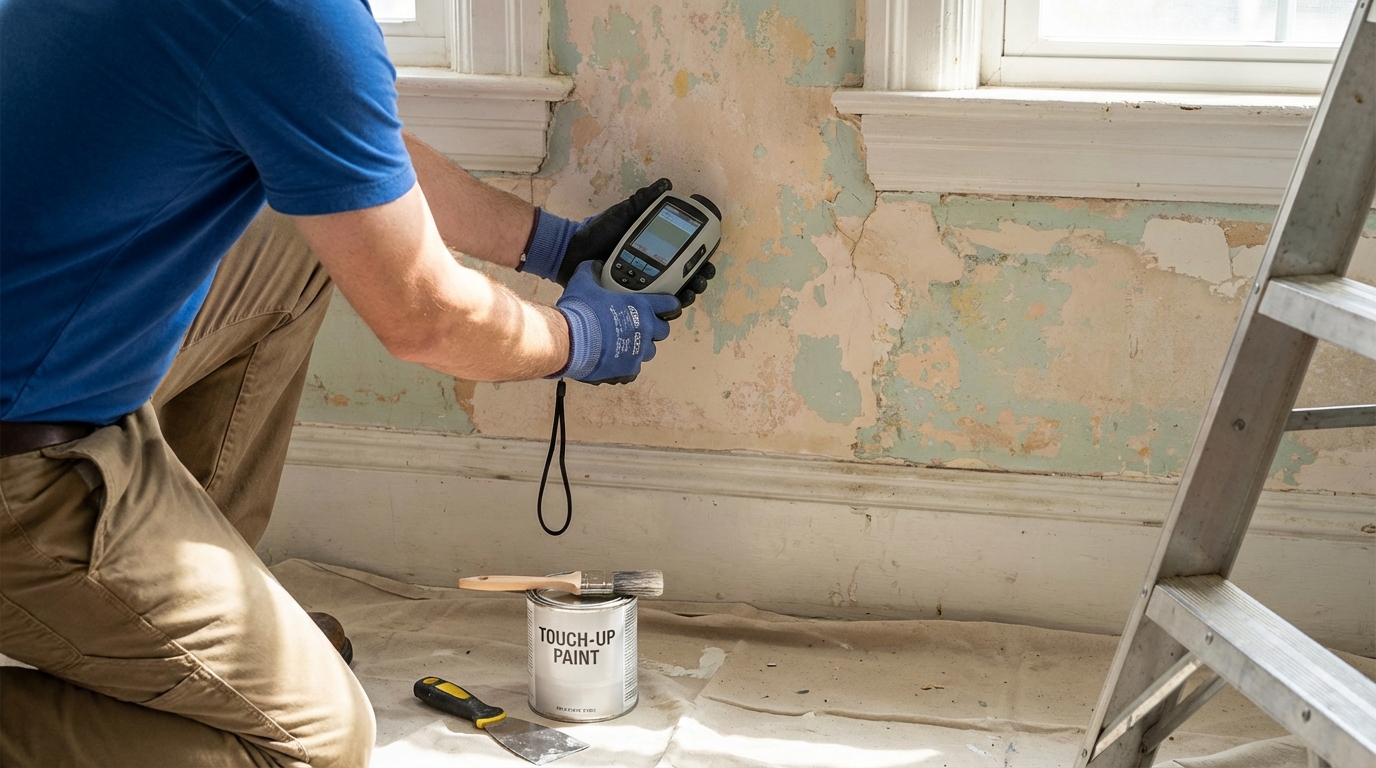
Cut a paint chip from an inconspicuous spot and take it to the store for scanning. The color matching machine will get you 90% of the way there. But that last 10%? That's where most touch-ups become visible. Here's how to get the closest match possible and hide the difference when you can't.
I learned this the hard way after patching a hole in my living room. Took a photo of the wall to the paint store, got a "match," and painted the patch. In daylight, it stuck out like a sore thumb. Slightly too warm, slightly too glossy. Ended up repainting the entire wall to hide it.
Why paint matches are never exact
Before we talk solutions, understand why this is hard:
Fading
Paint fades over time, especially in sunny rooms. Your "match" is to the original color, not what's on your wall now. Even a year of sun exposure changes the color.
Batch variation
Two cans of the "same" paint can have slight differences. Paint is mixed from pigments, and tiny variations in the mix show up on walls.
Sheen differences
The same color in flat vs. satin looks completely different. If your touch-up has even slightly different sheen, it's visible.
Application method
Roller vs. brush leaves different textures. Factory-applied paint vs. DIY application looks different. These texture differences catch light differently.
The paint has cured
Fresh paint looks different than cured paint. Your touch-up needs 30 days to fully cure and reach its final color.
Method 1: Get a physical sample
The best matches come from actual paint chips, not photos.
Where to cut
Choose a spot that won't be missed:
- Inside a closet
- Behind furniture that never moves
- Behind a light switch plate (turn off power first)
- Near the floor behind a baseboard
How to cut
- Use a sharp utility knife
- Cut a piece at least 1" x 1" (larger is better)
- Try to get down to the drywall so you get all layers
- Take the piece, not just surface scrapings
At the store
Most paint stores have spectrophotometers that scan your sample and create a formula. This is more accurate than visual matching or photos.
Ask them to make a small test amount first if possible. Some stores will do a pint or even a sample pot.
Method 2: Find the original paint
If you know what paint was used, this is easier.
Check for labels
Previous owners sometimes leave paint cans in the garage or basement. Check for:
- Paint can labels
- Color codes written on the can lid
- Stickers on the wall behind outlet covers
Look for records
Some painters leave notes about colors used. Check:
- Inside the circuit breaker panel
- On the inside of a closet door
- In home inspection reports
- In closing documents if you bought recently
Contact previous owners
If the house was painted professionally, they might remember the painter. Painters often keep records.
Method 3: The paint store match
If you can't get a physical sample, bring the best photo you can.
For better photo matches
- Photograph in natural daylight
- Include a white piece of paper for color reference
- Take multiple photos at different times of day
- Clean the wall first so dirt doesn't affect the color
What to expect
Photo matches are approximate. The store's computer is comparing your photo to their database. Lighting in your photo affects the result.
Always get a test sample before buying a full gallon. Test it on the actual wall.
The touch-up reality
Here's the truth: perfect touch-ups are nearly impossible on walls painted more than a few months ago.
Touch-ups that work
- Fresh walls (painted within last few months)
- Using the exact same paint can
- Small spots (nail holes, scuffs)
- Walls that don't get direct sunlight
Touch-ups that show
- Walls older than 6 months
- Large patches
- High-visibility areas
- Sunny walls that have faded
Better strategies
Feather to a corner
Instead of touching up just the spot, paint from the damage to the nearest corner or edge. Natural breaking points hide color transitions.
Paint the whole wall
Often the best solution. One wall repainted blends better than a visible touch-up in the middle of a wall.
Use the same sheen
If your walls are satin, use satin. Flat touch-up on satin walls is immediately visible. Semi-gloss touch-up on satin walls is obvious too.
Match application method
If walls were rolled, use a roller for touch-ups. Brush marks look different than roller texture.
Let it cure
Fresh paint looks darker. Wait 30 days before judging the match. Many "bad matches" even out with curing.
For large repairs
If you're patching a significant area (bigger than a dinner plate):
Prime the patch
New drywall compound absorbs paint differently than painted wall. Prime the patch first, or it will flash differently.
Extend beyond the repair
Paint at least 6 inches beyond the repair in all directions. Blend edges by dry-rolling (rolling with almost no paint).
Consider the whole wall
For repairs larger than about 2 square feet, you'll probably get better results painting the entire wall.
When to just repaint
Sometimes matching isn't worth the effort:
- Multiple touch-ups needed on one wall
- Touch-up color is noticeably off
- The wall was due for repainting anyway
- You're touching up more than 10% of the wall's area
A fresh coat on the whole wall looks better than multiple visible patches.
Your best bet for a close match
Get a physical chip from a hidden spot and have it scanned at the paint store.
For touch-ups on older walls, expect imperfection. Feather to corners, match the sheen exactly, and use the same application method.
When in doubt, paint the whole wall. It's more work, but the result is invisible, which is the whole point.
And keep some leftover paint from every project, properly sealed. Future you will thank present you.