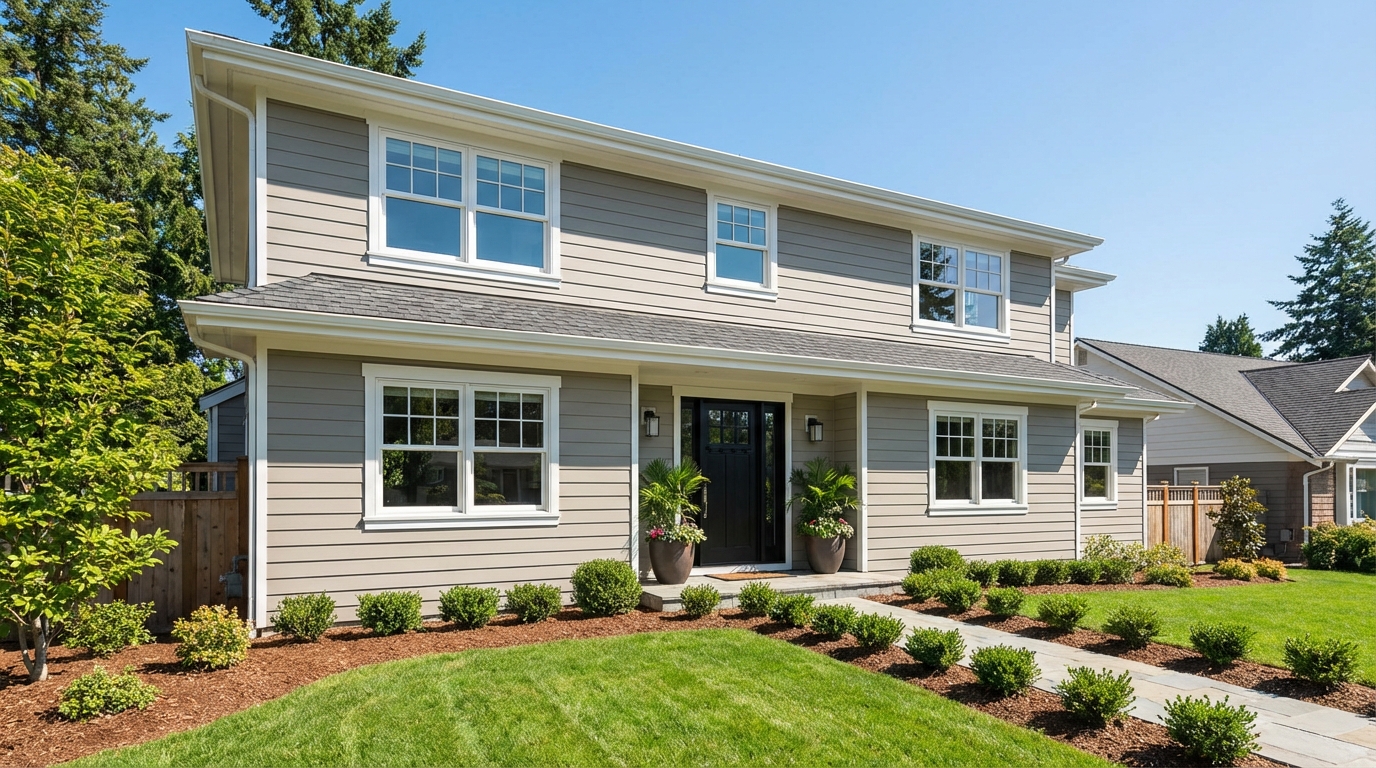
Homes with greige (gray-beige) exteriors sell for up to 4% more than similar homes with other colors. Black or charcoal front doors add perceived value. Bright or unusual colors can reduce offers. Here's what the actual data says about exterior paint and home prices.
I've watched friends agonize over exterior colors like it's purely personal preference. It is personal, but if you're planning to sell within 5-10 years, some colors have measurable financial impact. The research is surprisingly clear.
What the data shows
Zillow's analysis
Zillow analyzed over 135,000 photos from sold homes across the US. Their findings:
Exterior colors that sold for more:
- Greige/gray-beige: +3.9%
- Light blue/pale gray: +2.8%
- Warm white/cream: +1.2%
Exterior colors that sold for less:
- Bright yellow: -2.1%
- Brown/tan: -1.8%
- Gray (too cool/stark): -1.2%
Front door impact
The front door color has outsized impact on first impressions:
Colors that performed well:
- Black: Associated with higher sale prices
- Navy blue: Strong positive response
- Charcoal/dark gray: Modern, upscale perception
Colors to avoid:
- Bright orange or yellow: Divisive
- Unpainted/weathered: Signals neglect
- Mismatched from overall scheme: Looks like afterthought
Why these colors work
Greige works everywhere
Greige (that gray-beige blend) is neutral enough to appeal broadly while having enough warmth to feel welcoming. It complements most roof colors, landscapes, and neighborhood styles.
Good greige examples:
- Benjamin Moore Revere Pewter HC-172 (body)
- Sherwin-Williams Agreeable Gray SW 7029
- Farrow & Ball Hardwick White No. 5
Cool grays need warm accents
Pure gray exteriors can read as cold or industrial. If you go gray, add warmth through:
- Cream or warm white trim
- Wood elements
- Warm-toned landscaping
- Black or navy accents
White still works
Classic white exteriors remain safe choices, but the undertone matters:
Warm whites (sell well):
- Benjamin Moore White Dove OC-17
- Sherwin-Williams Alabaster SW 7008
- Creamy whites with yellow undertones
Cool whites (more risky):
- Pure brilliant white can look stark
- Blue-undertone whites feel cold in many climates
- Works better in warm, sunny climates
Regional variations
Northeast US
Traditional colors perform well:
- Colonial colors (deep reds, forest greens)
- Warm whites with black shutters
- Stone gray with white trim
Southeast US
Warmth and hospitality:
- Soft whites and creams
- Warm grays and greiges
- Coastal blues (near water)
Southwest US
Earth tones and desert palette:
- Terra cotta and adobe tones
- Warm beiges and tans
- Sage greens
Pacific Northwest
Nature-inspired palettes:
- Forest greens and slate blues
- Warm wood tones
- Deep charcoals
Midwest US
Classic and traditional:
- Warm whites and creams
- Traditional grays
- Deep blues and greens
The psychology behind it
Broad appeal = higher offers
Buyers mentally subtract renovation costs. An unusual color means "I'll have to repaint" which becomes "lower offer."
First impressions stick
85% of buyers decide about a home within seconds of seeing it. Exterior color is the first thing they notice.
Photography matters
Most buyers see homes online first. Colors that photograph well get more clicks, more showings, more offers.
Specific color recommendations
Safe choices (maximize resale)
Body colors:
- Sherwin-Williams Repose Gray SW 7015
- Benjamin Moore Edgecomb Gray HC-173
- Behr Silver Drop N520-1
Trim colors:
- Sherwin-Williams Extra White SW 7006
- Benjamin Moore Simply White OC-117
- Crisp white (any quality brand)
Door colors:
- Benjamin Moore Black Beauty 2128-10
- Sherwin-Williams Tricorn Black SW 6258
- Farrow & Ball Hague Blue No. 30
Moderate risk (character with appeal)
Body colors:
- Benjamin Moore Hale Navy HC-154
- Sherwin-Williams Sea Salt SW 6204
- Farrow & Ball Pigeon No. 25
Accent colors:
- Deep red doors
- Hunter green shutters
- Warm yellow accents
Higher risk (strong personal statement)
Body colors:
- Bright yellows
- Deep purples
- Bold oranges
These can work beautifully but narrow your buyer pool. Fine if you're staying forever; risky if selling soon.
The trim and accent strategy
Even with a safe body color, trim and accents add character:
Classic formula
- Neutral body (greige, warm gray, white)
- Crisp white trim
- Bold door color (black, navy, red)
Modern formula
- Dark body (charcoal, navy)
- Same-tone or slightly lighter trim
- Black or matching door
Traditional formula
- White or cream body
- White trim
- Colored shutters and door
Common mistakes
Ignoring fixed elements
Your roof, brick, stone, and landscaping aren't changing. The exterior color must work with them.
Before choosing:
- Note your roof color and undertones
- Consider brick or stone colors
- Look at neighboring homes
Choosing from small chips
Exterior colors look dramatically different at scale. Always test with large samples on the actual house.
Forgetting lighting
North-facing facades look cooler. South-facing look warmer. The same color reads differently on each side of your house.
Trendy over timeless
Trends cycle. The "it" color of 2024 might look dated by 2030. Stick with classics if resale is the goal.
When to ignore the data
The data represents averages. Your specific situation might warrant different choices:
Historic homes
Period-appropriate colors often matter more than trend data. A Victorian shouldn't be greige.
Unique architecture
Modern architecture might demand bold choices. A mid-century modern deserves a mid-century palette.
Strong neighborhood character
If every house on your street is a different bright color (like San Francisco Victorians), blending in might actually mean standing out.
You're staying forever
If you'll never sell, paint it purple. Life's too short for safe greige.
So what should you paint your house
For maximum resale value: greige or warm gray body, white trim, black or navy door.
For character with broad appeal: traditional colors appropriate to your region and architecture.
For personal expression: paint what you love, understanding the potential resale impact.
The best exterior color is one you'll enjoy looking at every day that also appeals to a broad range of future buyers. For most people, that's some version of warm neutral with confident accents.
And whatever you choose, quality paint and proper prep matter more than the specific color. A beautifully executed unusual color beats a poorly done "safe" color every time.