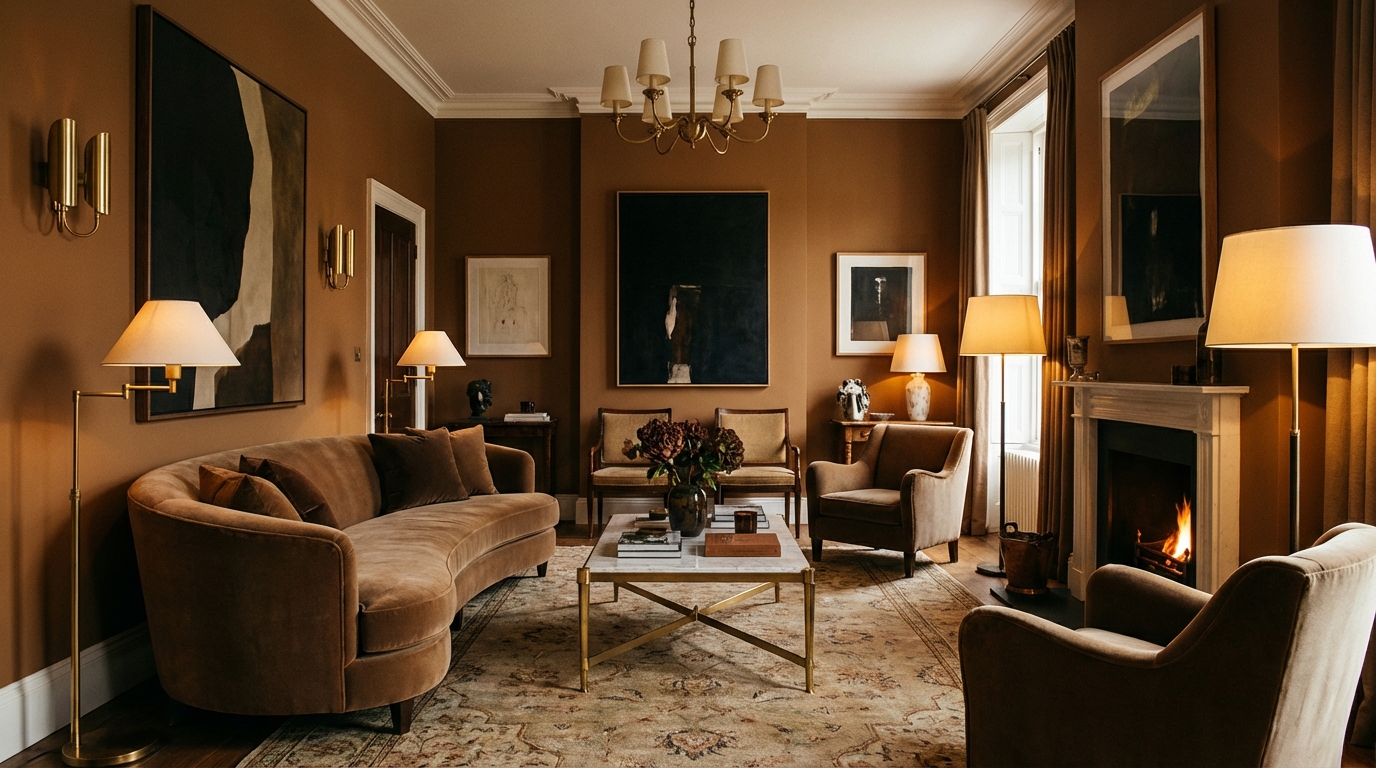
Brown is back. And not the flat, soul-crushing brown of 1990s builder-grade apartments. This is a different brown—warmer, richer, more layered. Think tobacco, mocha, espresso, cognac. Colors that feel like leather armchairs and aged whiskey.
If you'd told me three years ago that brown would be the trendiest color of 2026, I would've laughed. Brown? The color that everyone spent the 2010s desperately painting over? The color that "dated" was practically synonymous with?
But here we are. Benjamin Moore's 2026 Color of the Year (Silhouette) is essentially a brown. Sherwin-Williams' pick (Universal Khaki) is a brown. Clark + Kensington chose Hazelnut Crunch. Krylon went with Coffee Bean. More than a third of this year's Color of the Year picks have brown DNA.
The pendulum has swung. And it makes total sense if you think about it.
Why Brown Is Coming Back Now
The timeline goes like this:
1990s-2000s: Brown everywhere. Builder beige, tan, taupe. Every new construction home had it. It was safe, it was cheap, it was boring.
2010s: The backlash. Cool grays took over. Agreeable Gray, Repose Gray, Revere Pewter. Everyone painted over their browns in a collective act of rebellion. "Modern" meant "no warm tones."
2020-2024: Warm tones started creeping back in—but through greens, terracottas, and warm whites. Not brown directly. People still associated brown with dated interiors.
2025-2026: Brown fully arrives, but reinvented. It's no longer flat and lifeless. The new browns have complexity—charcoal undertones, purple undertones, red undertones. They feel intentional, not default.
The emotional reason is simpler: after years of cool, sometimes sterile interiors, people want warmth. Real warmth. And there's nothing warmer than brown. It's the color of wood, earth, leather, chocolate, coffee—all things that make humans feel grounded and comfortable.
The New Brown Spectrum
"Brown" in 2026 isn't one color. It's a whole spectrum of warm, rich tones. Understanding where each one sits helps you pick the right shade.
Light Browns (The Approachable Entry Point)
These are your warm neutrals that read as "elevated beige." Light enough to use on every wall without feeling dark, warm enough to feel current.
- Universal Khaki SW 6150 (Sherwin-Williams) — LRV: 37. The 2026 COTY. A true warm neutral that leans brown without being "brown." Works everywhere—living rooms, bedrooms, hallways, the entire house.
- Accessible Beige SW 7036 (Sherwin-Williams) — LRV: 58. On the lighter side but clearly warm. The new Agreeable Gray.
- Shaker Beige HC-45 (Benjamin Moore) — LRV: 47. A classic that's been around forever. Feels fresh again because the trend caught up to it.
Best for: Whole-house color, open-concept spaces, anyone who wants brown's warmth without the drama.
Medium Browns (The Sweet Spot)
Rich enough to have real presence, light enough to not overwhelm. This is where the magic happens.
- Smokey Taupe 983 (Benjamin Moore) — LRV: 25. My pick for "the perfect brown." Has just enough gray to feel modern without losing warmth.
- Tiki Hut SW 7509 (Sherwin-Williams) — LRV: 16. Warmer and more amber. Think leather and caramel.
- Hazelnut Crunch (Clark + Kensington) — LRV: ~22. The 2026 COTY from C+K. Warm reddish-brown that's cozy without being heavy.
Best for: Dining rooms, bedrooms, home offices. Rooms where you want warmth and personality.
Dark Browns (The Statement)
These are the "walk into the room and go wow" browns. Low LRV, high drama.
- Silhouette AF-655 (Benjamin Moore) — LRV: ~8. The 2026 COTY. Shifts between charcoal, brown, and plum. It's not a simple brown—it's about five colors at once.
- Urbane Bronze SW 7048 (Sherwin-Williams) — LRV: 8. The 2021 COTY that predicted this whole trend. Still holds up.
- Coffee Bean (Krylon) — LRV: ~5. Very deep. Almost black-brown. For small accent spaces or really well-lit rooms.
Best for: Powder rooms, accent walls, dining rooms, home libraries. Rooms where drama serves a purpose.
The Red-Browns (Warm and Spicy)
These lean more toward cognac and terracotta. They're the browns that feel most alive—almost like they glow from within.
- Kingsport Gray HC-86 (Benjamin Moore) — LRV: 18. Despite the name, this is a warm brown with red undertones. Beautiful.
- Cavern Clay SW 7701 (Sherwin-Williams) — LRV: 23. More terracotta than traditional brown. The bridge between the terracotta trend and the brown trend.
- Tudor Brown HC-67 (Benjamin Moore) — LRV: 5. Deep red-brown. Think aged leather.
Best for: Living rooms (Cavern Clay), dining rooms (Tudor Brown), any room where you want energy along with warmth.
How to Tell Good Brown From Bad Brown
This is the critical part. Because the difference between "sophisticated tobacco brown" and "sad office from 2003" comes down to a few things:
Undertones Are Everything
Brown with gray undertones = modern and sophisticated Brown with yellow undertones = dated and flat (the '90s brown) Brown with red/orange undertones = warm and alive Brown with purple undertones = rich and complex
The test: Hold the paint chip next to a pure white card. What color do you see in the brown? If it looks yellow-tan, skip it. If it looks warm gray, reddish, or purplish—that's the good stuff.
LRV Sweet Spot
For most rooms, a brown with LRV between 15-40 is the sweet spot. Dark enough to read as intentionally brown (not "is that beige?"), light enough to not eat all your light.
Below LRV 10, you need excellent natural or artificial lighting. Above LRV 50, you're in "warm neutral" territory more than "brown."
The Sheen Matters More With Brown
Brown in a flat/matte finish looks rich and velvety. Brown in semi-gloss can look like a chocolate bar. For walls, stick with matte or eggshell. The one exception: trim and doors, where satin in a matching or darker brown can look polished.
Pairing Brown With Everything Else
Brown is one of the easiest colors to pair. It works with almost anything because it's a natural neutral.
Brown + Cream/Warm White
The classic combo and the safest. Brown walls, cream trim, warm white ceiling. Works in every style from traditional to modern.
Brown + Brass/Gold
Brown and brass just work together. Brass light fixtures, brass cabinet pulls, gold frames—they all glow against brown walls.
Brown + Green
Earth tones belong together. A brown room with green plants or green accent pieces just feels right. Brown walls in a room with large plants is chef's kiss territory.
Brown + Blue
The surprise pairing. A warm brown with denim blue or dusty blue accents creates a really nice tension between warm and cool. Not obvious, but it works.
Brown + Black
High contrast, very modern. Brown walls with black-framed art, black furniture legs, matte black hardware. Feels intentional and graphic.
What to Avoid
- Brown + gray = muddy and confused. Pick a lane.
- Brown + orange = too much warmth, starts feeling like a fall decoration
- Brown + bright white = too stark of a contrast. Go cream or warm white instead.
Room-by-Room Recommendations
Living Room
Go medium-toned. Universal Khaki or Smokey Taupe. Something you can live with for hours without fatigue. Brown living rooms feel like walking into a good coffee shop.
Dining Room
Go deeper. Silhouette or Urbane Bronze. Dining rooms are evening spaces. Warm lighting + deep brown = magic. Candlelight on brown walls has a glow that you can't get with any other color.
Bedroom
Medium to dark, depending on how cozy you want. Tiki Hut for a warm embrace. Silhouette if you want to feel like you're sleeping in a luxury hotel.
Kitchen
Light browns only. Universal Khaki or Shaker Beige on walls. Dark brown cabinets can work but dark brown walls in a kitchen can feel heavy and impractical.
Home Office
Medium brown. Smokey Taupe or Kingsport Gray. Brown is grounding and doesn't cause eye strain during long work sessions.
Bathroom
Surprisingly good. A medium brown in a bathroom with white fixtures creates a spa-like feel. Way more interesting than the standard white or gray bathroom.
Will Brown Date Quickly?
Here's the thing—brown already dated once. People painted over it in the 2010s. So is this a cycle that'll repeat?
Probably not in the same way. The browns of the '90s were flat, yellow-toned, and used as a default. The browns of 2026 are complex, warm-toned, and used as a deliberate choice. That matters.
That said, the super-trendy browns (like Silhouette) might peak and feel "very 2025-2026" in five years. The warm neutrals (Universal Khaki, Accessible Beige) are safe for a decade or more. The medium-tone classics (Smokey Taupe) are timeless.
The Bottom Line
Brown's comeback isn't a fluke. It's a correction. After a decade of cool, sterile interiors, people want warmth. And nothing is warmer than brown.
The key is picking a brown with good undertones (gray, red, or purple—never flat yellow), the right depth for your room, and pairing it with warm whites and natural materials.
Test before you commit. The range of browns is wide and the wrong shade is the difference between "old-world charm" and "depressing office." Preview a few options in your actual room with Muro, narrow to your top 2-3, then sample on the wall.
Brown is back. And this time, it's actually good.